
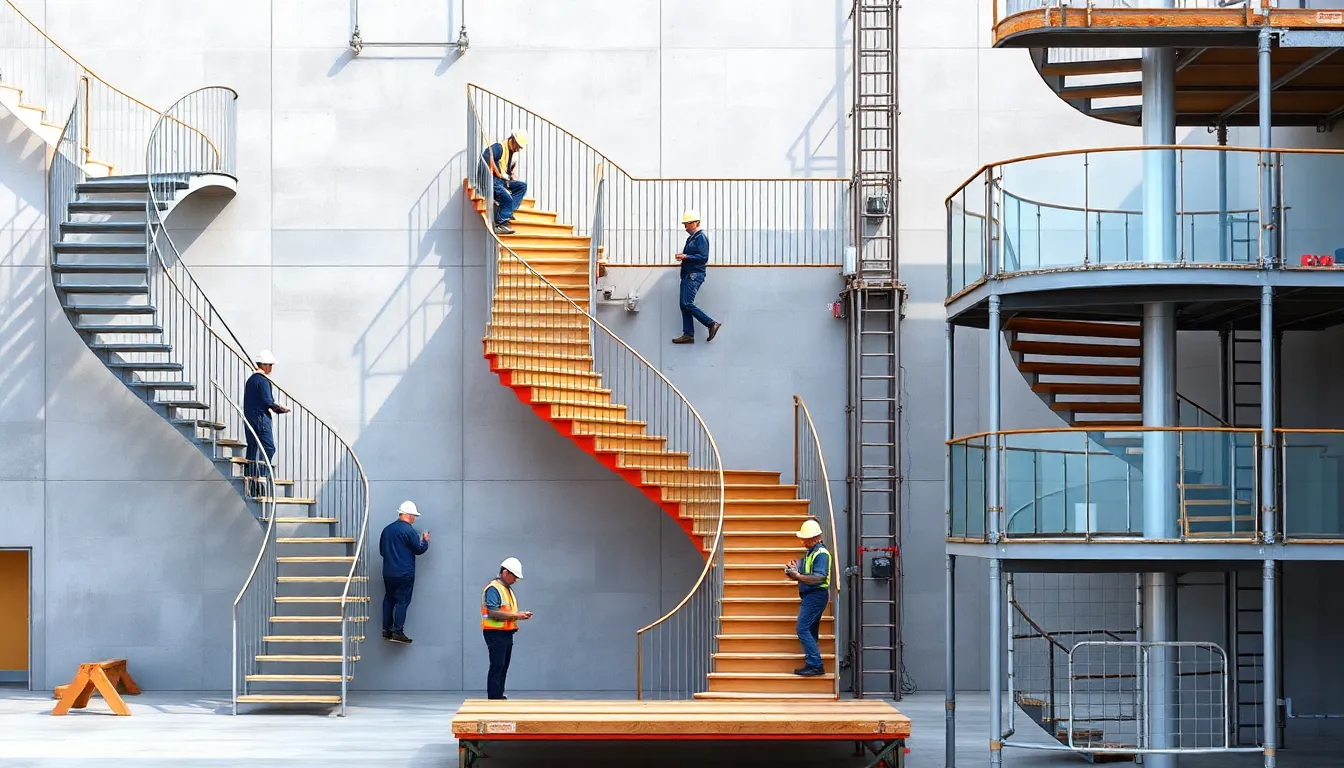

Stairs are the unsung heroes of building construction, quietly elevating lives one step at a time. From grandiose spiral staircases that make you feel like royalty to practical straight stairs that get you where you need to go, the variety is as diverse as the people who use them. Who knew that a simple structure could have so much personality?
Types of Stairs in Building Construction
Stairs come in various designs tailored to meet specific functional and aesthetic needs in buildings.
Straight Stairs
Straight stairs represent the simplest design. Often used in residential settings, they consist of a straight run from one floor to another. Their straightforward design allows for easy construction and maintenance.
L-Shaped Stairs
L-shaped stairs create a turn at a landing, typically offering a more elegant transition between levels. These stairs make efficient use of space by fitting into corners or tight areas.
U-Shaped Stairs
U-shaped stairs feature two straight runs connected by a landing. This design maximizes floor space and provides an aesthetically pleasing look, balancing form and functionality.
Spiral Stairs
Spiral stairs serve as a stylish alternative, often used in tight spaces. Their design utilizes minimal floor space while providing a dramatic and eye-catching appearance.
Floating Stairs
Floating stairs present a modern and minimalist approach. They appear to “float” without visible supports, enhancing the aesthetic of open spaces and complementing contemporary designs.
Curved Stairs
Curved stairs follow a smooth arc, adding elegance to any setting. This style often becomes a focal point in larger buildings, showcasing craftsmanship and design.
Modular Stairs
Modular stairs consist of pre-fabricated components. Installation is straightforward, making them a popular choice for quick builds or renovations.
External Stairs
External stairs provide access between outdoor levels. Their designs vary widely based on safety and aesthetic considerations, offering functionality for patios, decks, or fire escapes.
Understanding the various types of stairs helps in selecting the appropriate design for specific construction needs. Each type contributes distinct advantages, enhancing both practicality and visual appeal in architecture.
Straight Stairs
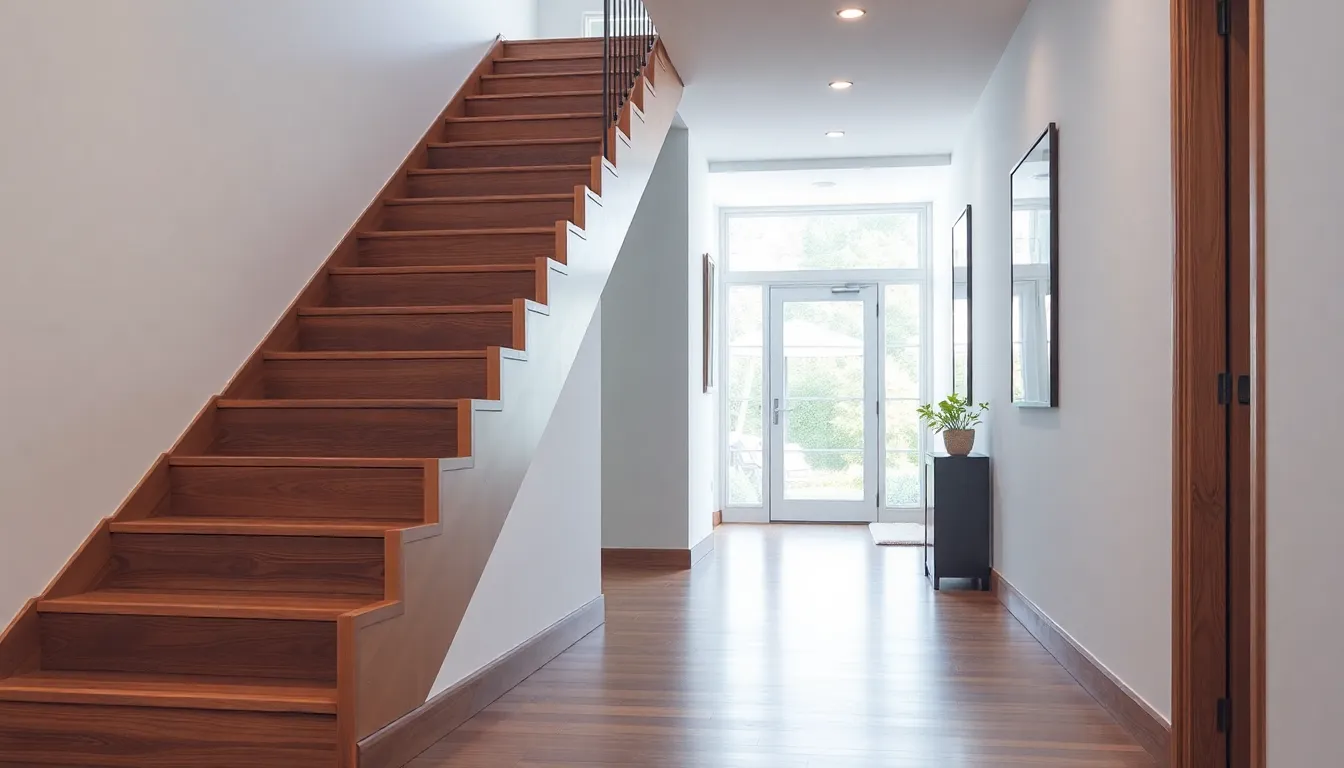
Straight stairs feature a continuous run without any turns or landings. These stairs are common in residential and commercial buildings, providing straightforward access between levels.
Characteristics
Straight stairs possess several defining traits. They include a simple design that maximizes space efficiency. Constructed with uniform riser heights and tread depths, they enable easy navigation. Additionally, straight stairs can accommodate various materials, such as wood, concrete, or metal, depending on the architectural style. Their design allows for flexibility in width, making them suitable for different traffic needs.
Advantages and Disadvantages
Straight stairs offer multiple advantages. Their uncomplicated design often leads to lower construction costs. Space efficiency remains a significant benefit, as they fit well in narrow areas. Maintaining a straight stair system proves easier than other types. However, there are disadvantages. A straight staircase can lack visual interest compared to more intricate designs. Safety remains a concern, as the absence of landings may increase the risk of falls if not constructed with caution.
L-Shaped Stairs
L-shaped stairs, also known as quarter-turn stairs, feature a 90-degree turn, enhancing both functionality and design appeal. Their configuration minimizes overall floor space, making them suitable for various architectural settings.
Design Features
L-shaped stairs combine straight runs with a landing that allows for change in direction. This design maximizes space efficiency while facilitating smoother transitions between floors. Typically featuring uniform risers, these stairs offer ease of navigation. Construction materials include wood, concrete, and metal, ensuring versatility in design. Additionally, L-shaped stairs allow for creative railings and balustrades, elevating the aesthetic appeal of the staircase.
Use Cases
L-shaped stairs are common in residential homes, especially in tight spaces where maximizing floor area is crucial. They work well in corners or when connecting different levels, enhancing accessibility. Commercial buildings often utilize them for office interiors, providing a practical way to navigate multi-story environments. This design also suits public venues, where they can direct foot traffic efficiently. Overall, L-shaped stairs effectively combine utility and style across various applications.
U-Shaped Stairs
U-shaped stairs consist of two parallel runs connected by a landing, forming a U-shape. This design offers both aesthetic appeal and practical advantages throughout building construction.
Structural Benefits
A U-shaped stair configuration provides enhanced structural stability. The two parallel runs distribute weight evenly, reducing the risk of sagging. Construction materials such as wood or metal can easily accommodate this design. Engineers often find U-shaped stairs versatile, allowing integration into various architectural styles. Safety features like handrails fit seamlessly along the soaring sides, offering support. Overall, the landing not only serves as a transition point but also reinforces the overall strength.
Space Efficiency
Space efficiency marks an important characteristic of U-shaped stairs. The design maximizes available area while allowing for effective traffic flow. Unlike straight stairs, U-shaped stairs minimize the footprint by bending back on themselves, making them suitable for tighter spaces. Families often choose this style for homes with limited floor plans, ensuring fluid movement between levels. Additionally, this configuration can create defined spaces below the stairs, enhancing storage or usability. Designers frequently appreciate the flexibility in placement, leading to innovative layout possibilities.
Spiral Stairs
Spiral stairs offer a unique solution for both aesthetic and practical needs in building construction. Their design allows for efficient use of vertical space, making them particularly popular in areas where traditional stairs might not fit.
Aesthetic Appeal
Designers often favor spiral stairs for their elegance and visual impact. Curved lines and intricate details create a striking focal point in spaces, enhancing both modern and classic decors. Material choices like wood, metal, or glass further allow customization to match interior themes. Spiral stairs can complement open floor plans, inviting light and views between levels. Their compact design promotes a sense of sophistication, adding character to any setting.
Practical Considerations
Space efficiency stands out as a primary advantage of spiral stairs. They require less floor area than conventional stair designs, making them ideal for smaller homes or apartments. Spiral configurations enable easy navigation in tight spaces, such as lofts or attics. Safety features, including handrails and treads, ensure stability during use. Builders often recommend checking local building codes to ensure compliance with safety regulations. Overall, spiral stairs provide functionality while transforming the look and feel of a space.
Curved Stairs
Curved stairs offer a dramatic and elegant solution in building construction, enhancing both functionality and style. Their graceful arcs create visual interest while optimizing space usage.
Design Considerations
Designing curved stairs requires careful planning to ensure safety and aesthetic appeal. Architects often emphasize radius dimensions for a smooth curve. Fingertip grips are crucial along the handrail for safety. Railing designs can vary, allowing for unique looks that align with interior themes. The selection of materials impacts both durability and visual charm. Wood, metal, and glass each offer distinct advantages and styles. Ensuring compliance with local building codes is essential for a successful installation. By prioritizing these factors, indoor and outdoor spaces can feature stunning and functional curved stairs, increasing overall appeal.
Installation Challenges
Installing curved stairs presents unique challenges that require expertise. Precision during construction is critical to achieving the desired curve. Uneven surfaces must be addressed to create a stable foundation. Custom fabrication may be necessary for unique designs, impacting time and budget. Adjustments during installation are often required to ensure proper alignment and functionality. Skilled craftsmanship is key for smooth transitions and accurate measurements. Additionally, creating a secure handrail that complements the curve adds complexity. Successful installation addresses these challenges, resulting in a striking architectural feature that stands the test of time.
Stairs play a crucial role in building construction by blending functionality with aesthetic appeal. The diverse types of stairs available cater to a wide range of needs and preferences. From the simplicity of straight stairs to the elegance of spiral and curved designs, each option brings unique advantages to a space.
By understanding the characteristics and benefits of various stair types, architects and builders can make informed decisions that enhance both usability and visual impact. Whether optimizing small areas with L-shaped stairs or creating stunning focal points with floating designs, the right choice can elevate a building’s overall design. Embracing the versatility of staircases ensures they remain an integral part of modern architecture.


