
Table of Contents
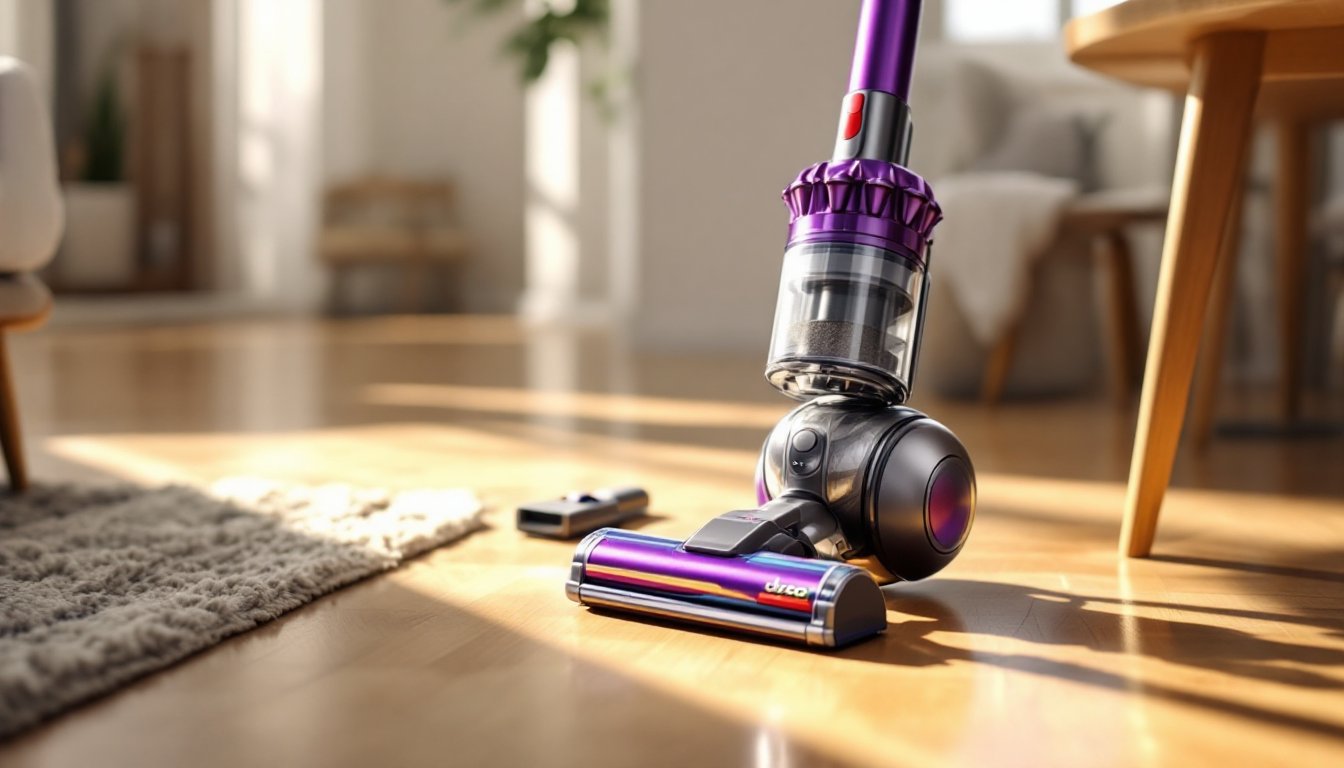
ToggleThe Dyson Small Ball vacuum has carved out a niche for homeowners who need serious suction without dragging around a full-size upright. It’s built around Dyson’s ball steering technology, the same concept that made their larger models popular, but in a frame that’s lighter and more maneuverable. This isn’t a cheaply made compact vacuum trying to mimic the big boys. It’s a purpose-engineered machine designed for smaller homes, apartments, and anyone tired of wrestling a heavy vacuum around furniture. For DIYers tackling dusty renovation projects or everyday cleanup in tight spaces, the Small Ball delivers real performance without requiring a storage closet.
Key Takeaways
- The Dyson Small Ball vacuum combines Dyson’s signature ball steering technology with a lighter 13.3-pound frame, making it ideal for smaller homes and apartments where maneuverability and storage are priorities.
- Its Radial Root Cyclone technology and HEPA filtration system maintain consistent suction and capture fine particles down to 0.3 microns, making it effective for everyday cleanup and DIY dust from renovation projects.
- The Small Ball excels on hardwood, tile, and low-to-medium pile carpets but struggles with high-pile or shag carpeting due to limited brush bar contact and lack of adjustable height settings.
- Regular maintenance—including monthly filter washing, brush bar cleaning, and hose inspections—is essential to sustain performance and prevent suction loss.
- At the $300–$400 price point, the Dyson Small Ball offers superior suction and build quality compared to budget compact vacuums, but cordless stick vacuums may be better for larger homes or those requiring extended runtime.
What Makes the Dyson Small Ball Vacuum Stand Out?
The Dyson Small Ball distinguishes itself through a combination of engineering decisions that prioritize maneuverability without sacrificing core vacuum performance. It weighs roughly 13.3 pounds, which is notably lighter than Dyson’s full-size uprights that can tip past 17 pounds. The reduced weight comes from a more compact motorhead and dust bin, but the cyclone technology, Dyson’s signature method for separating dust and debris from airflow, remains intact.
The ball mechanism itself is the core feature. Instead of fixed rear wheels, the vacuum pivots on a sphere, allowing users to steer with wrist movements rather than shoulder effort. This makes navigating around table legs, under low furniture, and through doorways significantly easier than traditional upright designs. For anyone working in a home with multiple rooms or frequent layout changes (common during DIY projects), this steering advantage is tangible.
The power cord on most Small Ball models runs about 25 feet, which provides decent reach without constant outlet switching in average-sized rooms. The dust bin capacity sits at 0.37 gallons, smaller than full-size models but still adequate for a two-bedroom home or one full floor of a larger house before emptying.
Key Features and Technology
Dyson Small Ball models incorporate Radial Root Cyclone technology, which uses centrifugal forces to spin dust out of the airstream. Unlike bagged vacuums that lose suction as the bag fills, the cyclonic system maintains consistent airflow. The motorized brush bar (sometimes called a beater bar) features stiff nylon bristles that agitate carpet fibers to dislodge embedded dirt.
The vacuum includes a HEPA filtration system that captures particles as small as 0.3 microns, relevant if anyone in the household has allergies or if you’re cleaning up fine construction dust from drywall work or sanding. The entire machine is bagless, with a clear bin that lets users see when it’s time to empty. Dyson’s bin release is a single-button mechanism that drops debris into a trash can without requiring hand contact with the dirt.
Most Small Ball models ship with a combination tool and stair tool. The combination tool has both a brush attachment and a crevice nozzle, useful for baseboards, window sills, and workshop cleanup. The stair tool features a wider head that covers more surface area on steps, though its effectiveness depends on carpet pile depth.
Best Uses for the Dyson Small Ball in Your Home
The Small Ball excels in environments where space and storage are constraints. Apartments, condos, and smaller single-family homes (under 1,500 square feet) are ideal use cases. The compact footprint makes it easy to tuck into a coat closet or utility room without monopolizing floor space.
For DIYers, this vacuum handles post-project cleanup well, sawdust from trim work, drywall dust (though you should use a shop vac for heavy amounts), paint chips, and debris from demolition. The motorized brush bar should be turned off when vacuuming up larger debris like wood shavings to prevent clogs. The HEPA filter is a plus if you’re dealing with fine particulates, but it will need cleaning more frequently in dusty renovation scenarios.
The ball steering makes it particularly effective for homes with lots of furniture or tight corners. If your layout includes breakfast nooks, reading alcoves, or furniture-heavy living rooms, the Small Ball navigates these areas better than box-style vacuums or stick models without powered heads.
It’s less suited for whole-house cleaning in homes over 2,000 square feet. The smaller dust bin and shorter cord mean more frequent stops to empty and replug. If you’re vacuuming a three-story house or a sprawling ranch layout, a larger upright or a cordless stick with swappable batteries will save time.
Performance on Different Floor Types
On low-to-medium pile carpet, the Small Ball performs admirably. The motorized brush bar agitates fibers effectively, and the suction pulls embedded dirt from depths that many stick vacuums miss. Carpet transitions, moving from hardwood to area rugs, for example, are smooth thanks to the ball steering and low-profile head.
High-pile or shag carpets present more challenge. The brush bar can struggle to maintain contact with the carpet base when pile height exceeds about 1 inch. Suction remains strong, but without consistent brush contact, surface debris may get pushed around rather than lifted. If your home has plush bedroom carpeting or shag rugs, a vacuum with adjustable height settings (which most Small Ball models lack) would be more effective.
Hardwood, tile, and laminate floors are where the Small Ball shines. The motorized brush bar should be disengaged on hard surfaces to prevent scattering debris, and most models include a hard floor setting. The vacuum’s low center of gravity and ball steering make it easy to follow grout lines, get into corners, and clean around kitchen islands. The stiff bristles won’t scratch sealed hardwood, but use caution on unfinished or oil-treated wood where repeated passes with the brush bar might cause minor dulling over time.
For homes with mixed flooring, common in open-plan layouts, the Small Ball handles transitions without manually adjusting height, though users should toggle the brush bar on and off depending on surface type. This takes practice and can interrupt workflow if you’re moving quickly between rooms.
Maintenance Tips to Keep Your Dyson Small Ball Running Strong
Regular maintenance is straightforward but non-negotiable if you want sustained performance. The dust bin should be emptied when debris reaches the MAX line, overfilling reduces suction and can cause dust to bypass the cyclones and clog the filter. To empty, hold the vacuum over a trash can, press the red bin release, and let gravity do the work. Tap the bin gently to dislodge stuck debris, especially fine dust.
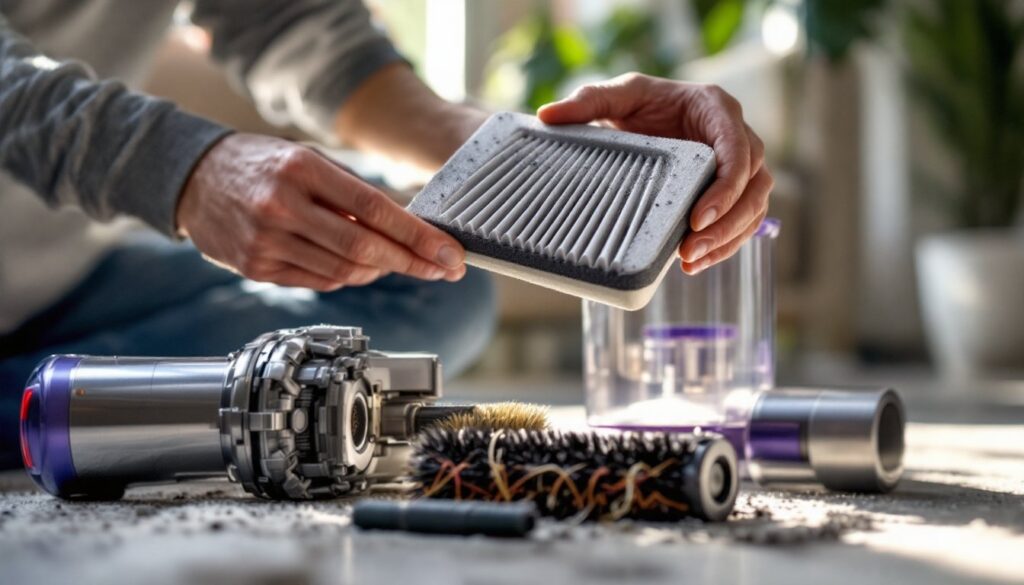
The HEPA filter requires washing every 1-3 months depending on use. Remove the filter (usually located near the ball or top of the cyclone assembly), rinse under cold water until runoff is clear, and let it air-dry for at least 24 hours before reinstalling. Never use the vacuum with a damp filter, moisture can damage the motor and reduce suction. If you’re doing heavy DIY work, check and clean the filter more frequently.
The motorized brush bar collects hair, thread, and fibers. Check it monthly and use scissors or a seam ripper to cut away tangled material. Dyson’s brush bars are removable on most models, consult your manual for the release mechanism (often a coin-turn lock). Clean hair buildup off the end caps and bearings to prevent motor strain.
Cyclone cones can accumulate fine dust over time. Wipe them down with a damp microfiber cloth every few months. Avoid submerging the cyclone assembly in water unless your model’s manual explicitly allows it.
Inspect hoses and attachments for blockages. A clog in the hose will kill suction even if the filter and bin are clean. Detach the hose, look through it toward a light source, and use a broom handle to push out any obstructions.
How the Dyson Small Ball Compares to Other Compact Vacuums
Compared to other compact uprights, the Small Ball sits in the premium price tier, usually $300-$400 depending on sales and bundle deals. Competitors like the Bissell PowerForce Compact or Eureka Airspeed fall into the $70-$150 range but lack cyclonic technology and HEPA filtration. Those budget models are fine for basic carpet cleaning but don’t handle fine dust or allergens as effectively.
Against cordless stick vacuums, the Small Ball offers stronger sustained suction and doesn’t suffer battery fade. High-quality stick vacuums like the Dyson V-series or Shark Vertex provide excellent maneuverability and storage but typically run 20-40 minutes per charge. For whole-home cleaning or extended DIY cleanup, the corded Small Ball won’t quit mid-job.
The Shark Navigator Lift-Away is a closer competitor in both price and feature set. It’s slightly heavier but includes a detachable canister for portable cleaning, which the Small Ball lacks. The Shark also offers more attachments out of the box. But, independent reviews of the Dyson Small Ball consistently note superior suction and build quality compared to Shark models at similar price points.
For homeowners prioritizing space-saving storage and easy maneuvering over raw bin capacity or accessory count, the Small Ball is a solid pick. If budget is tight or you need a detachable canister for above-floor cleaning (ceiling fans, high shelves), other options may fit better.
Conclusion
The Dyson Small Ball vacuum delivers legitimate performance in a compact, maneuverable package. It’s not the right tool for every home, large square footage, high-pile carpets, or users who want cordless convenience should look elsewhere. But for smaller spaces, mixed flooring, and DIYers who need reliable post-project cleanup without storing a behemoth, it’s a well-engineered option that holds up under regular use. Maintenance is simple, parts are durable, and the ball steering genuinely makes a difference in tight layouts.