
Table of Contents
ToggleYour GE Cafe refrigerator’s water filter does more than make ice taste better, it removes chlorine, sediment, heavy metals, and other contaminants from every glass of water and every batch of ice. Most homeowners forget about this filter until the change light blinks or the water flow slows to a trickle. Replacing it is one of the simplest maintenance tasks you’ll do on your fridge, typically taking less than five minutes and requiring zero tools. This guide covers everything from identifying the correct filter model to troubleshooting odd tastes or slow flow after a swap.
Key Takeaways
- A GE Cafe refrigerator water filter removes chlorine, sediment, heavy metals, and contaminants from water and ice, and can be replaced in under five minutes without tools.
- Most GE Cafe models use the RPWFE filter (post-2018) with an RFID chip for authentication, while older models use the RPWF, and identifying your filter model is essential for compatibility and warranty coverage.
- Replace your GE Cafe water filter every six months or after filtering 200–300 gallons, watching for warning signs like slow flow, cloudy ice, off taste, or a red indicator light.
- Genuine GE Cafe filters carry NSF/ANSI certifications for safety and performance, while third-party alternatives may lack certifications and trigger error codes or void warranties.
- After installing a new filter, flush 2–3 gallons of water to purge air and carbon fines, then reset the change indicator button to complete the maintenance task.
- Homes with high sediment loads, well water, or municipal chloramine treatment may need filter replacements every 3–4 months for optimal performance and taste.
Understanding Your GE Cafe Water Filter System
GE Cafe refrigerators use an internal filtration cartridge mounted inside the upper-right corner of the fresh food compartment. The filter housing is accessible without pulling the fridge away from the wall or removing any panels.
Most GE Cafe models use a twist-and-pull replacement system, no clips, no screws, just a quarter-turn counterclockwise to unlock. The filter cartridge itself contains a pleated carbon block or granular activated carbon (GAC) media that physically traps particles and chemically adsorbs chlorine and volatile organic compounds (VOCs).
The system operates under household water pressure, typically 40–120 psi, and feeds both the dispenser and ice maker. When the filter media becomes saturated, usually after filtering 200–300 gallons, flow rate drops and contaminant removal declines.
GE Cafe filters carry NSF/ANSI Standard 42 and 53 certifications, meaning they’ve been independently tested to reduce chlorine taste and odor (Standard 42) plus lead, cyst, and other health-related contaminants (Standard 53). Third-party filters may fit the housing but often lack these certifications, which can affect both performance and warranty coverage.
Which Water Filter Does Your GE Cafe Refrigerator Need?
GE Cafe refrigerators primarily use one of three filter models, depending on the production year and configuration:
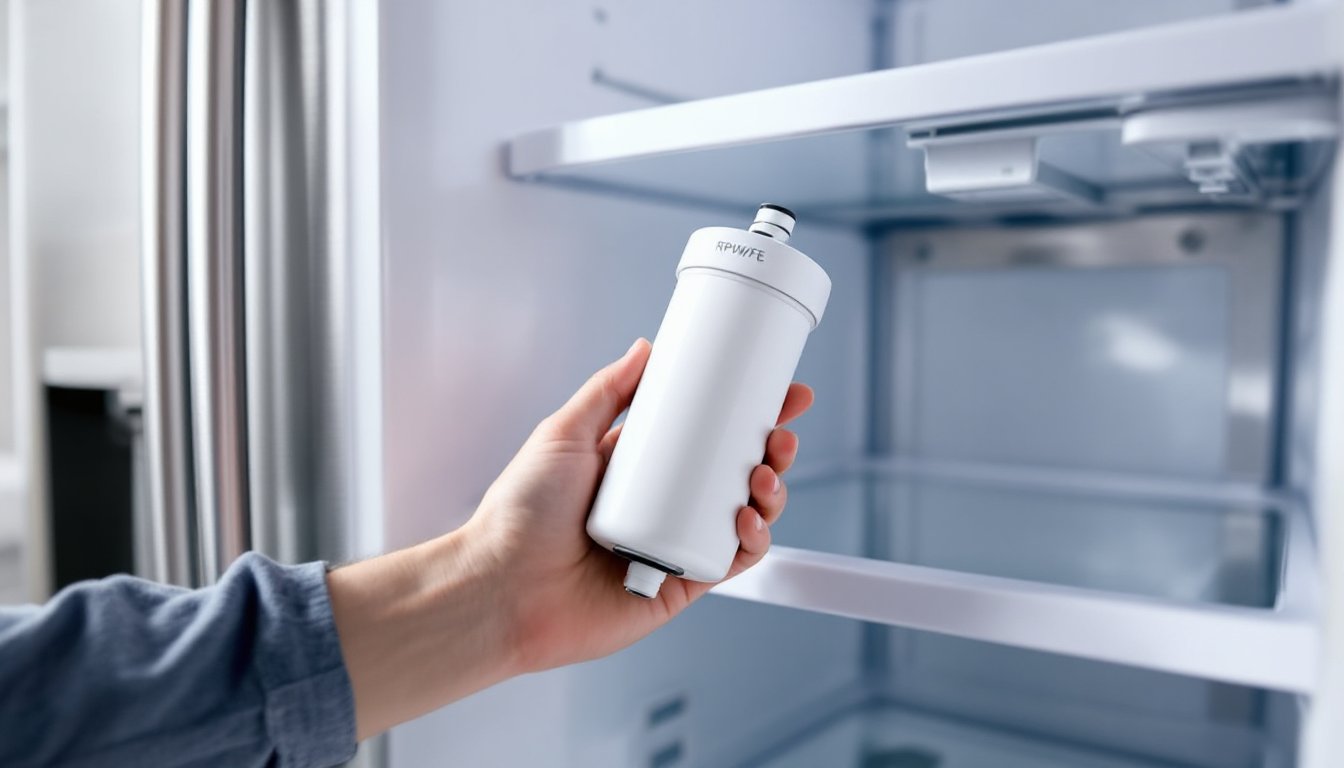
- RPWFE: The current standard for most GE Cafe side-by-side and French-door models manufactured after 2018. This filter includes an embedded RFID chip that communicates with the refrigerator’s control board to verify authenticity.
- RPWF: The predecessor to the RPWFE, used in models from roughly 2014–2018. It fits the same housing but lacks the RFID chip.
- XWFE: Found in select newer models with space-constrained installations, particularly bottom-freezer and compact French-door units.
To identify your filter, open the fresh food compartment and locate the cylindrical cartridge in the upper-right corner. The model number is printed on the cap in raised letters. Alternatively, check your owner’s manual or the label inside the refrigerator door.
RFID-equipped models (those requiring RPWFE) will display an error message or fail to reset the change indicator if you install a non-chipped filter. If your fridge previously used RPWF and now shows an “authentic filter” warning after an update, you’ll need to switch to RPWFE.
Nominal filter life is six months or 200 gallons, whichever comes first. Homes with high sediment loads or chloramine-treated municipal water may see faster saturation.
Step-by-Step: How to Replace Your GE Cafe Water Filter
Replacing a GE Cafe water filter is a tool-free, five-minute job. Here’s the procedure:
- Locate the filter housing. Open the fresh food compartment. The filter is in the upper-right corner, behind a round or rectangular cap.
- Twist counterclockwise. Grip the filter cap firmly and rotate it about 90 degrees (a quarter-turn) counterclockwise until it stops. You’ll feel it release from the locking tabs.
- Pull straight out. The cartridge should slide free. Have a towel handy, residual water in the housing (typically 1–2 ounces) will drip out.
- Remove the cap from the old filter. Most GE filters have a reusable cap that twists off. Transfer this cap to the new cartridge. On RPWFE filters, the cap is integral and doesn’t transfer.
- Prepare the new filter. Remove any protective seals or caps from both ends of the new cartridge. Do not remove the O-ring or gasket, it’s critical for a watertight seal.
- Insert and lock. Slide the new filter into the housing until it stops, then twist clockwise a quarter-turn. You’ll hear or feel a click when it locks.
- Flush the system. Dispense 2–3 gallons of water to purge air and loose carbon fines. The first few glasses will be cloudy and may contain black specks, this is normal and harmless.
- Reset the change indicator. Press and hold the filter reset button (usually labeled “Ice/Water” or “Filter Reset”) for 3–5 seconds until the indicator light turns green or stops blinking.
No tools, no shut-off valves, no mess beyond a damp towel. According to home appliance maintenance guides, this is one of the easiest filter swaps across all refrigerator brands.
When to Replace Your Filter and Warning Signs
GE Cafe refrigerators display a filter status light on the dispenser panel:
- Green: Filter is fresh (0–4 months or 0–150 gallons).
- Yellow/Amber: Nearing end of life (4–6 months or 150–200 gallons).
- Red: Overdue for replacement (6+ months or 200+ gallons).
Don’t wait for red. A saturated filter can harbor bacteria and allow contaminants to pass through unfiltered.
Physical warning signs that the filter is spent:
- Slow water flow from the dispenser, even with good household pressure.
- Cloudy or discolored ice, often with a yellowish tint.
- Off taste or odor in water or ice, chlorine, mustiness, or metallic notes.
- Sediment or black specks in ice cubes (if persisting beyond the initial flush, it indicates media breakdown).
Homes on well water or municipal systems with high chloramine or sediment may need to replace filters every 3–4 months rather than six. If you notice flow or taste issues before the indicator light changes, trust your senses and swap early.
Hard water doesn’t shorten filter life directly (the filter doesn’t remove calcium or magnesium), but sediment carried with hard water can clog the media faster.
Where to Buy Genuine GE Cafe Water Filters
Genuine GE filters are available from multiple sources, each with trade-offs:
- GE Appliances Parts Store (geapplianceparts.com): Direct from the manufacturer. Expect to pay $50–$60 per cartridge or about $45 each in multi-packs. Shipping is typically free on orders over $50.
- Amazon: Convenient and fast, often with Subscribe & Save discounts that bring the per-filter cost to $40–$45. Verify the seller is “GE Appliances” or “Amazon.com” to avoid counterfeits.
- Home Depot and Lowe’s: In-store availability for same-day pickup. Pricing runs $50–$55 per filter. Stock can be hit-or-miss for the RPWFE model.
- Big-box retailers (Costco, Sam’s Club): Occasional two-packs at $80–$90, a slight savings if you’re stocking up.
Many product review sites have tested third-party “compatible” filters and found inconsistent performance, particularly with RFID-chipped models. Non-genuine filters may physically fit but trigger error codes, fail NSF certification, or void your appliance warranty if they cause a malfunction.
If cost is a concern, genuine multi-packs offer the best value without sacrificing performance. A three-pack typically costs $120–$135, or about $40–$45 per filter, competitive with gray-market alternatives but with guaranteed compatibility.
Troubleshooting Common Water Filter Issues
Filter won’t lock into place: Check that you’ve fully removed any shipping caps from both ends of the cartridge. Inspect the O-ring on the filter tip, if it’s missing or pinched, the filter won’t seal. Rotate the filter an extra few degrees: some models require more than 90 degrees of twist to engage.
“Replace Filter” light won’t reset: Press and hold the reset button for a full 5 seconds, not just a quick tap. On touchscreen models, access the settings menu and manually reset the filter timer. If the light persists after a genuine RPWFE installation, the RFID reader may need service, contact GE support.
Water tastes odd or cloudy after replacement: Always flush 2–3 gallons through the dispenser before use. Carbon fines and trapped air cause the first few glasses to look and taste off. If the issue persists beyond 3 gallons, the filter may be defective or a counterfeit.
Slow flow after new filter installation: Confirm you removed all protective caps and that the O-ring is seated correctly. Low household water pressure (below 40 psi) can also cause slow dispenser flow, check the pressure at your main supply. Sediment buildup in the inlet valve (not the filter) sometimes mimics a clogged filter: this requires a service call.
Ice tastes fine, but water tastes bad (or vice versa): The filter serves both lines, so this points to an issue in the ice maker tray or water line, not the filter itself. Run a cleaning cycle on the ice maker and flush the water line. Detailed troubleshooting for refrigerator water systems can help isolate line-specific problems.
Leak at the filter housing: A missing or damaged O-ring is the usual culprit. Remove the filter, inspect the rubber gasket on the cartridge tip, and replace if torn or flattened. Over-tightening (forcing the filter past the stop point) can also crack the housing, twist only until you feel resistance.
Conclusion
Swapping a GE Cafe refrigerator water filter is one of the quickest wins in home maintenance, no tools, no plumber, and noticeable results in both taste and flow. Mark your calendar for every six months, keep a spare cartridge on hand, and flush thoroughly after each install. Your ice and water will stay clean, and you’ll avoid the bigger headaches that come from running an expired filter too long.