
Table of Contents
ToggleIndoor air quality isn’t just about comfort, it’s about health. Dust, allergens, pet dander, and airborne particles circulate through most homes without anyone noticing until symptoms start. Ionic air purifiers promise to tackle these pollutants without filters, using electrical charges to pull particles from the air. But do they actually work, and are they the right choice for your home? This guide breaks down how ionic purifiers function, which models lead the pack in 2026, and what trade-offs come with the technology.
Key Takeaways
- Ionic air purifiers use negatively charged ions to attract and remove airborne particles like dust and pollen without filters, making them energy-efficient and silent alternatives to HEPA units.
- Verify CARB certification and ozone output before purchasing an ionic air purifier, especially for households with respiratory sensitivities, since some models produce trace amounts of ozone.
- Ionic purifiers work best in small, enclosed spaces under 500 square feet, such as bedrooms and offices, but are less effective in large open-plan areas where charged particles disperse quickly.
- Top models like the Envion Ionic Pro Platinum ($120–$150) and Airfree P1000 ($200–$250) offer zero ozone production with minimal maintenance, while budget options like Clarifion ($30) suit tight spaces.
- Ionic air purifiers cost less than $5 annually to operate and eliminate the need for filter replacements, but particles settle on surfaces rather than being actively removed, requiring regular dusting.
- Pair ionic purifiers with proper ventilation, humidity control, and regular cleaning for best results, as no air purifier alone solves all indoor air quality issues.
What Are Ionic Air Purifiers and How Do They Work?
Ionic air purifiers, also called ionizers, operate differently than traditional HEPA filter models. Instead of trapping particles in a physical filter, they emit negatively charged ions into the air. These ions attach to airborne particles like dust, pollen, mold spores, and smoke, giving them a negative charge.
Once charged, the particles are attracted to positively charged surfaces in the room (walls, floors, furniture) or to a collection plate inside the unit itself. Some ionizers include an electrostatic precipitator (ESP) that actively collects charged particles on metal plates, which need periodic cleaning.
The process is silent and energy-efficient. Most ionic purifiers consume less than 10 watts, making them cheaper to run than fan-driven HEPA units. There’s no motor noise, no filter replacement schedule, and minimal maintenance beyond wiping down collection plates every few weeks.
But, the technology has a notable byproduct: ozone. Some ionic purifiers produce trace amounts of ozone as a side effect of ionization. While modern units are designed to stay well below the EPA’s 0.05 ppm safety threshold, it’s worth confirming any model’s ozone output before purchasing, especially for households with respiratory sensitivities.
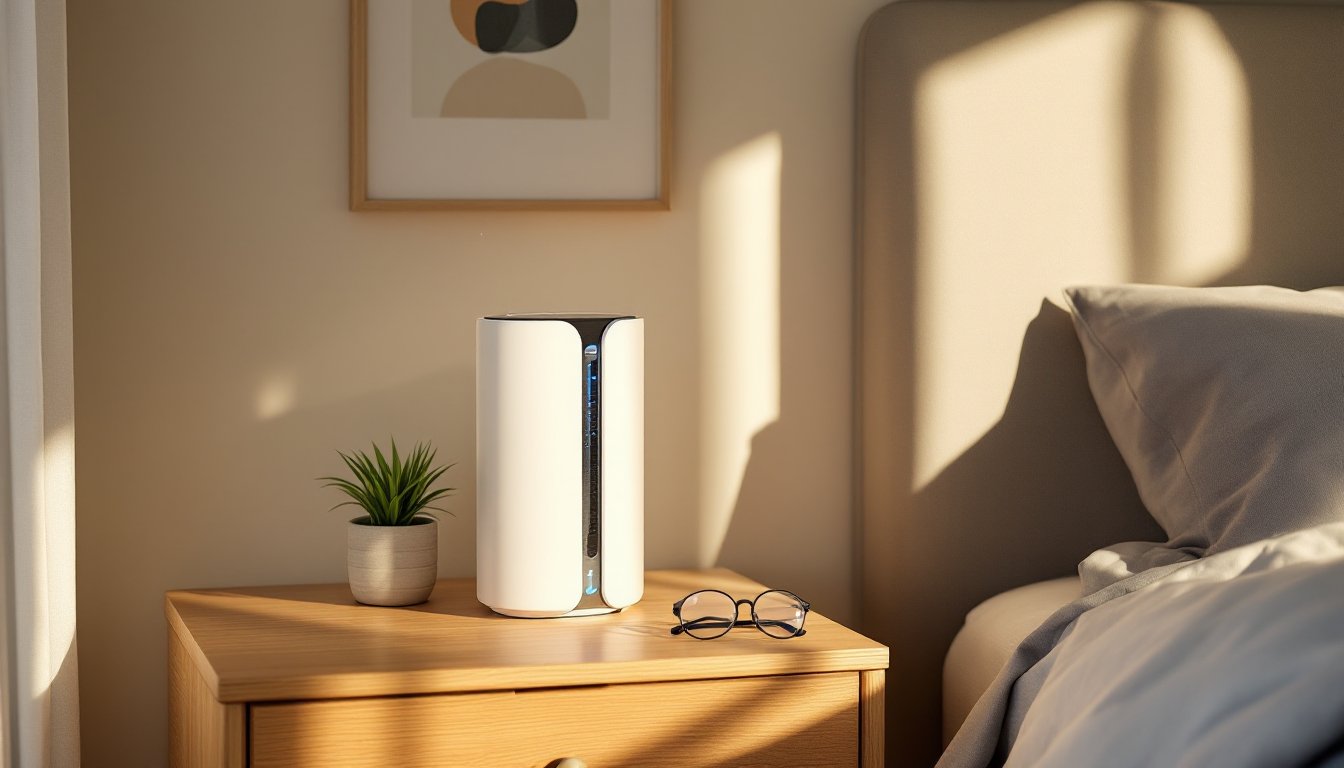
Ionic purifiers work best in smaller, enclosed spaces, bedrooms, home offices, or nurseries. They’re less effective in large, open-plan areas where charged particles disperse before settling. They also don’t remove gases or odors the way activated carbon filters do, so they’re not ideal for smoke-heavy environments or homes near industrial areas.
Top-Rated Ionic Air Purifiers for Home Use in 2026
The ionic purifier market has matured, with several standout models offering reliable performance without ozone concerns. Here’s what’s leading the category this year.
Envion Ionic Pro Platinum remains a top pick for bedrooms and small living spaces. It covers up to 500 square feet, uses a three-stage filtration system with permanent stainless steel collection blades, and produces zero detectable ozone. The blades pull out for easy washing, no replacement costs. It’s whisper-quiet and draws about 8 watts. Retail price hovers around $150, though sales can drop it to $120.
Airfree P1000 combines ionic technology with heat sterilization, incinerating microorganisms at over 400°F before releasing purified air. It’s ozone-free, handles up to 450 square feet, and requires zero maintenance, no filters, no plates to clean. The heat mechanism makes it slightly noisier than pure ionizers, but testing from Good Housekeeping consistently rates it highly for allergen reduction. Expect to pay $200–$250.
Clarifion Air Ionizer is the budget option. These compact plug-in units cost around $30 each and work well in bathrooms, closets, or small bedrooms (up to 150 square feet). They’re filterless, produce minimal ozone (certified under California’s strict ARB standards), and draw less than 2 watts. Drawback: no collection plate, so particles settle on nearby surfaces. You’ll need to dust more often.
Sharp Plasmacluster FP-A80UW uses proprietary ion technology that releases both positive and negative ions to neutralize odors and pathogens. It’s a hybrid model with a true HEPA filter, so it’s not a pure ionizer, but the ion function boosts particle removal in rooms up to 360 square feet. Digital Trends has highlighted its smart home integration and app controls. Price runs $300–$350.
For comparison, CNET reviews emphasize checking independent lab certifications, look for CARB (California Air Resources Board) approval to ensure ozone output stays safe.
Pros and Cons of Ionic Air Purification Technology
Key Benefits of Ionic Air Purifiers
Silent operation. No fan means zero noise. If you’re sensitive to white noise or need complete quiet for sleep or work, ionizers deliver. They’re especially popular in nurseries and bedrooms.
Low energy consumption. Most models use 5–15 watts, comparable to a nightlight. Running one 24/7 costs less than $5 per year in electricity in most regions.
No filter replacements. Traditional HEPA purifiers require new filters every 6–12 months at $30–$60 each. Ionic units either have permanent collection plates or no filter at all. Maintenance involves wiping plates with a damp cloth every 2–4 weeks.
Compact footprint. Many ionic purifiers are plug-in models or slim tower designs that don’t take up floor space. They’re ideal for tight rooms, RVs, or apartments.
Effective against fine particles. Ionizers excel at capturing ultra-fine particles (PM2.5 and smaller) that some HEPA filters struggle with. This includes smoke particles, certain allergens, and airborne bacteria.
Potential Drawbacks to Consider
Ozone production. Not all ionizers produce harmful ozone, but some older or poorly designed models do. Always verify CARB certification or third-party lab testing. If anyone in the household has asthma or COPD, prioritize ozone-free models.
Particles settle instead of being captured. Without a fan or collection plate, charged particles fall onto furniture, floors, and walls. You’ll notice a fine dust layer near the unit if you don’t clean regularly. This doesn’t remove particles from the home, it just moves them.
Limited range. Ionic purifiers work best in small, closed rooms. Open floor plans, high ceilings, or spaces over 500 square feet dilute effectiveness. Don’t expect a single unit to clean an entire basement or great room.
No odor or gas removal. Ionizers don’t address volatile organic compounds (VOCs), cooking smells, or chemical fumes. For those, you need activated carbon filtration.
Slower purification. HEPA purifiers with fans cycle room air multiple times per hour. Ionizers rely on passive attraction, so they take longer to noticeably improve air quality, often hours instead of minutes.
How to Choose the Right Ionic Air Purifier for Your Home
Start with room size. Measure the square footage of the target space and match it to the purifier’s coverage rating. Manufacturers list maximum coverage, but real-world performance drops in rooms with poor air circulation or multiple doorways. If a unit is rated for 400 sq ft, use it in a 300 sq ft room for better results.
Check ozone certification. Look for CARB compliance or certification from UL or Intertek. Avoid any model that doesn’t publish ozone output data. If the listing says “fresh scent” or “natural oxygen,” that’s marketing code for ozone, skip it.
Decide on collection method. Units with electrostatic collection plates require cleaning but keep particles contained. Filterless models are maintenance-free but let particles settle on surfaces. If you have allergies, choose a plate-based model to reduce airborne exposure.
Consider noise tolerance. Pure ionizers are silent, but hybrid models with fans or heat elements make low-level hum. If you’re using the purifier in a bedroom, test or research noise levels. Anything above 30 dB will be noticeable in a quiet room.
Factor in energy use and maintenance. Ionic purifiers are cheap to run, but check wattage if you’re running multiple units. Maintenance is minimal, just plate cleaning, but if you hate cleaning tasks, a filterless plug-in model might suit you better even though the dust settling issue.
Assess your primary concern. If you’re targeting allergens (pollen, pet dander), ionizers work well in bedrooms. For smoke or odors, you’ll need a hybrid model with activated carbon or a standalone carbon filter unit. For mold or bacteria, look at heat-based models like the Airfree series that sterilize instead of just trapping particles.
Budget realistically. Quality ionic purifiers range from $30 for plug-ins to $300 for advanced hybrids. Cheaper models work fine for small spaces, but investing $150–$250 gets you better build quality, certifications, and longer lifespan. Factor in zero ongoing filter costs when comparing to HEPA units.
Finally, don’t expect miracles. No air purifier replaces proper ventilation, regular cleaning, or addressing moisture issues that cause mold. Ionic purifiers are one tool in a larger indoor air quality strategy. Pair them with humidity control, frequent dusting, and air exchange for best results.
Conclusion
Ionic air purifiers offer a quiet, low-maintenance alternative to traditional HEPA units, especially for small spaces and allergen control. The technology works, charged particles do settle out of the air, but it’s not a universal solution. Ozone concerns, limited coverage, and lack of odor control mean ionizers aren’t right for every household. Match the unit to your room size, confirm ozone certifications, and set realistic expectations. For targeted use in bedrooms, offices, or nurseries, a quality ionic purifier can noticeably improve air quality without the noise and filter costs of conventional models.