
Table of Contents
ToggleEspresso kitchen cabinets bring depth, warmth, and sophistication to any cooking space. This rich, dark finish works across design styles, from traditional to contemporary, and pairs beautifully with a wide range of countertops, backsplashes, and hardware. Whether planning a full remodel or a cabinet refinish, espresso cabinets offer versatility without sacrificing visual impact. They hide everyday wear better than lighter finishes and create a striking backdrop for stainless appliances and colorful accents. This guide covers what espresso cabinets are, why they’re a smart choice, and how to style them for maximum effect.
Key Takeaways
- Espresso kitchen cabinets are a dark brown finish applied to hardwood or engineered materials that work across traditional, transitional, and contemporary design styles.
- Dark espresso finishes conceal wear, dust, and grime better than light-colored cabinets, making them practical for busy households while creating visual depth and anchor points in kitchen design.
- Pairing espresso cabinets with light countertops like white quartz, soft backsplashes, and adequate lighting prevents the space from feeling cave-like and maximizes the sophisticated impact.
- Hardware choices matter: brushed nickel, oil-rubbed bronze, and matte black complement espresso cabinets, while under-cabinet LED lighting is essential for functional visibility.
- Regular maintenance with a microfiber cloth, mild soap, and occasional oil-based polish keeps espresso cabinets looking sharp, while prompt attention to water damage and UV protection preserves the finish long-term.
What Are Espresso Kitchen Cabinets?
Espresso refers to a deep, dark brown stain or finish that resembles the color of freshly brewed espresso coffee. It’s not a wood species, it’s a finish applied to hardwood or engineered materials. Common base woods include maple, oak, cherry, and birch, all of which take the espresso stain differently due to grain density.
Maple produces a smooth, uniform espresso finish because of its tight grain. Oak shows more texture and grain lines, adding character. Cherry darkens naturally over time, so an espresso stain on cherry will deepen further with age. Birch offers a budget-friendly option with decent stain absorption.
Espresso finishes come in several sheens: matte, satin, and semi-gloss. Matte hides fingerprints and smudges but can look flat in low-light kitchens. Satin balances subtlety with reflectivity, while semi-gloss adds shine and is easier to wipe clean, ideal for high-traffic areas. The finish you choose impacts both maintenance and visual warmth.
Manufacturers often sell espresso as a pre-finished option on stock and semi-custom cabinets. If refinishing existing cabinets, espresso gel stain works well over previously stained wood after proper sanding and deglosser application. Always test stain on scrap wood or an inconspicuous door to confirm color match.
Why Choose Espresso Cabinets for Your Kitchen?
Espresso cabinets conceal wear and tear better than white or light-colored finishes. Scuffs, minor scratches, and everyday grime blend into the dark tone, reducing the frequency of touch-ups. This makes them practical for busy households with kids or pets.
They also anchor a kitchen visually. Dark cabinetry grounds the space, allowing lighter elements, countertops, backsplashes, walls, to pop. This contrast creates depth and prevents a washed-out look common in all-white kitchens.
From a resale perspective, espresso cabinets appeal to a broad audience. They’re not trend-dependent like certain colors (gray, navy) that cycle in and out of favor. Homebuyers often perceive dark wood tones as higher-end, even on mid-grade cabinetry.
Espresso works in small kitchens if paired with reflective surfaces and adequate lighting. The key is balancing dark cabinets with lighter walls, counters, or a bright backsplash to prevent the space from feeling closed in. Recessed lighting and under-cabinet LED strips are essential: without them, espresso cabinets can make a compact kitchen feel cave-like.
One downside: espresso shows dust and water spots more readily than medium-toned finishes. Wipe down surfaces regularly with a microfiber cloth to keep the finish looking sharp.
Best Design Styles for Espresso Kitchen Cabinets
Traditional kitchens benefit from espresso cabinets with raised-panel doors, crown molding, and decorative corbels. Pair them with warm-toned granite or butcher block counters and oil-rubbed bronze hardware. This combination feels classic without veering into dated territory.
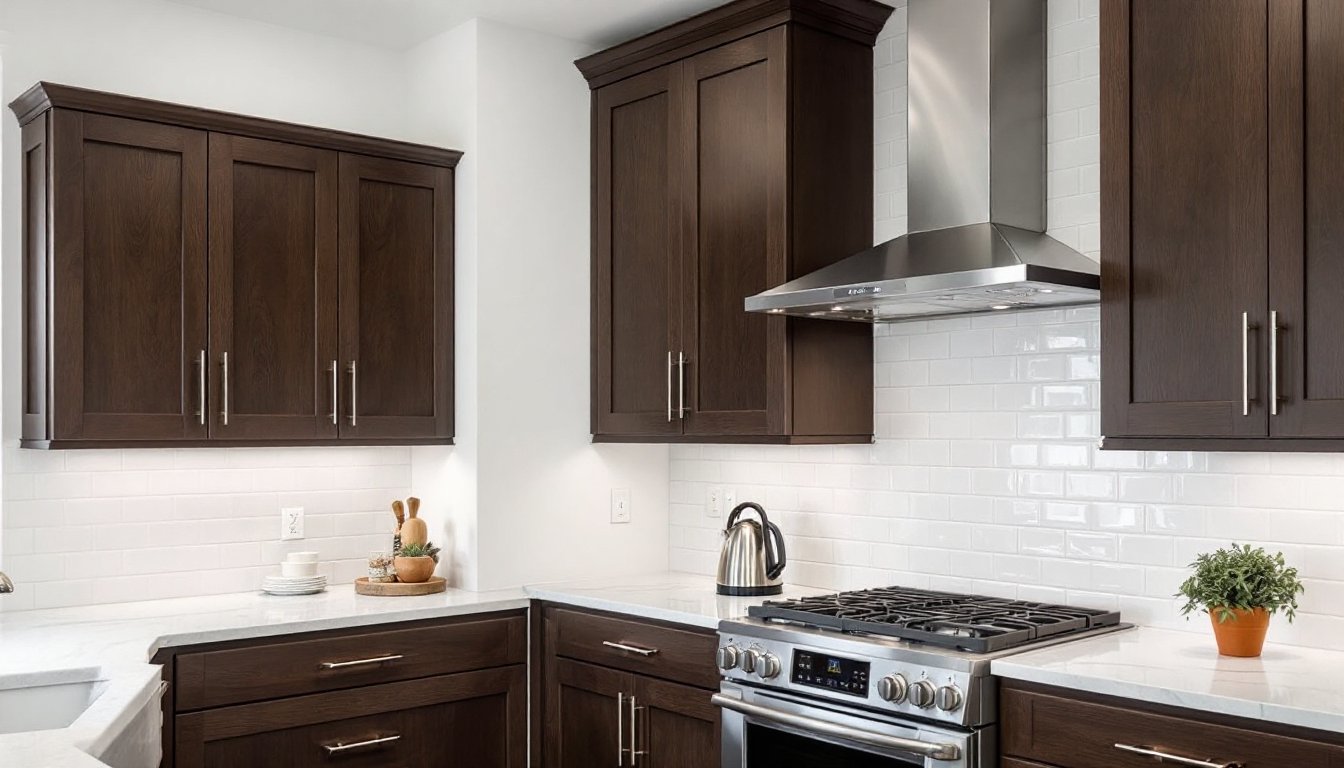
Transitional designs blend traditional warmth with modern simplicity. Use espresso shaker-style cabinets, flat-panel doors with minimal ornamentation. Combine them with subway tile backsplashes, quartz countertops, and brushed nickel or stainless hardware. The result is timeless but uncluttered.
Contemporary and modern kitchens showcase espresso in slab-door or frameless (European-style) cabinets. Skip the hardware entirely for a handleless look, or use sleek bar pulls in matte black or chrome. Pair with white quartz or concrete countertops and a geometric backsplash for sharp contrast. Espresso cabinets in modern kitchens often extend to the ceiling, creating a streamlined, built-in appearance.
Rustic or farmhouse styles can incorporate espresso on lower cabinets while keeping upper cabinets or open shelving in natural wood or white. This two-tone approach adds warmth without overwhelming the room. Designers who specialize in Craftsman kitchens often use espresso stain on quarter-sawn oak to highlight natural grain patterns.
Avoid pairing espresso cabinets with heavy, ornate tile or busy patterns. The dark finish already commands attention, let it be the focal point and keep surrounding elements simple.
Pairing Espresso Cabinets with Countertops and Backsplashes
Light countertops create the most dramatic contrast. White quartz (Caesarstone, Silestone) is a top choice: it’s durable, non-porous, and brightens the space. Carrara marble adds elegance but requires sealing and careful maintenance, espresso hides stains, but marble doesn’t. For a warmer look, cream or beige granite softens the contrast while maintaining visual interest.
Gray countertops bridge the gap between light and dark. Lighter grays (like certain quartzites) keep the kitchen airy, while charcoal or soapstone adds drama. Soapstone develops a natural patina over time, which complements espresso’s aged richness.
Wood countertops, butcher block or reclaimed wood, introduce warmth and texture. This pairing works especially well in transitional or rustic kitchens. Seal butcher block with food-safe mineral oil or a waterlox finish to prevent water damage near the sink.
For backsplashes, classic white subway tile remains foolproof. Lay it in a traditional brick pattern or herringbone for added interest. Glass tile in soft blues, greens, or grays reflects light and prevents the kitchen from feeling too heavy. Marble or travertine tile adds luxury but demands regular sealing.
Avoid dark backsplashes with espresso cabinets unless you’re aiming for a moody, dramatic look, and have excellent task lighting. A high-end gourmet kitchen might pull off an all-dark palette, but most residential spaces need contrast for balance.
Painted walls in soft white, light gray, or warm taupe let espresso cabinets shine. Skip bold wall colors: the cabinets already provide the punch.
Hardware and Fixtures That Complement Espresso Cabinets
Brushed nickel and stainless steel hardware offer a clean, modern look that doesn’t compete with the richness of espresso. Bar pulls (3-5 inches) and cup pulls work well on drawers and doors. Avoid overly ornate handles: they can look dated against dark cabinetry.
Oil-rubbed bronze or antique brass adds warmth and suits traditional or transitional kitchens. The slight patina on these finishes complements espresso’s depth. Pair with matching faucets and light fixtures for a cohesive look.
Matte black hardware creates bold, contemporary contrast, especially on shaker or slab-door cabinets. This pairing has surged in popularity, and real-world design galleries featuring espresso cabinets frequently showcase matte black accents for a dramatic effect.
Polished chrome works but can feel cold. If using chrome, warm the space with wood accents, natural textiles, or a butcher block island top.
For light fixtures, consider pendant lights over an island in matching finishes, brushed nickel, black, or bronze. LED under-cabinet lighting is non-negotiable: espresso cabinets absorb light, so task lighting prevents dim work surfaces.
Knobs vs. pulls: pulls are easier to grab and keep cabinet faces cleaner (less hand contact). If using knobs, choose a diameter of at least 1.25 inches for comfortable grip.
When installing hardware, measure carefully. Standard placement is 2.5 to 3 inches from the bottom corner of upper cabinet doors and top corner of lower doors. Use a template or jig to keep spacing consistent across all cabinets.
Maintenance Tips to Keep Espresso Cabinets Looking New
Dust and fingerprints show easily on espresso finishes. Wipe cabinets weekly with a microfiber cloth, slightly damp, not wet. Excess moisture can damage finishes and seep into seams.
For deeper cleaning, use a mild dish soap diluted in warm water. Avoid ammonia-based cleaners (Windex, Formula 409) and abrasive sponges: they can dull or scratch the finish. After cleaning, dry immediately with a soft towel.
Oil-based polishes (like Murphy Oil Soap or Howard Feed-N-Wax) restore sheen and add a protective layer. Apply sparingly every few months, over-application leaves a sticky residue that attracts dust.
Handle water damage promptly. Espresso stain doesn’t prevent water from penetrating the wood. If water pools near the sink or dishwasher, wipe it up immediately. Check cabinet bases and toe kicks for swelling or warping during routine cleaning.
Touch-up kits are available from most cabinet manufacturers. For minor scratches, espresso-colored furniture markers or gel stain can blend the damage. Sand lightly with 220-grit sandpaper, apply stain with a foam brush, let dry, then seal with a matching finish (matte, satin, or semi-gloss).
Prevent fading by minimizing direct sunlight exposure. UV rays lighten dark finishes over time. Install window treatments or UV-filtering film on windows that face the kitchen.
Inspect hinges and drawer slides annually. Tighten loose screws and lubricate soft-close mechanisms with silicone spray. Well-maintained hardware extends cabinet life and prevents stress on door frames.
If refinishing espresso cabinets yourself, expect to follow careful prep steps including deglossing, sanding, and applying multiple thin coats rather than one thick layer.
Conclusion
Espresso kitchen cabinets deliver lasting style, practical durability, and design flexibility. They anchor a kitchen with rich, warm tones while pairing beautifully with light counters, simple backsplashes, and quality hardware. Whether tackling a DIY refinish or selecting new cabinetry, espresso remains a solid choice for homeowners seeking a timeless, high-impact look that won’t feel dated in five years.