
Table of Contents
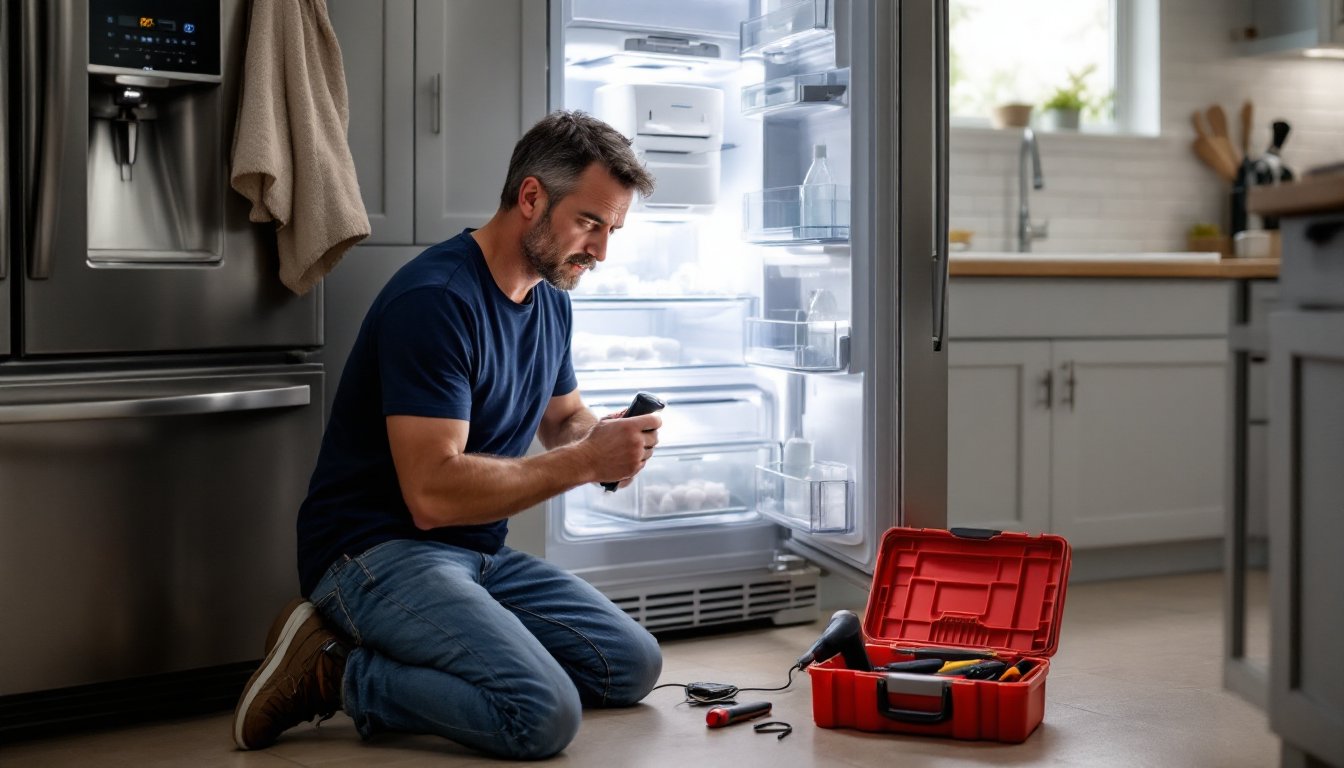
ToggleWhen a GE refrigerator stops producing ice, it’s more than just an inconvenience, it disrupts daily routines and forces trips to the store for bagged ice. The good news? Most ice maker failures stem from a handful of straightforward issues that homeowners can troubleshoot themselves. Before calling a repair technician or considering a replacement, it’s worth spending 30 minutes diagnosing the problem. This guide walks through seven common culprits behind a non-functioning ice maker, from water supply issues to component failures, with practical fixes anyone can tackle with basic tools.
Key Takeaways
- Most GE refrigerator ice maker not working issues stem from water supply problems, frozen lines, or disabled switches that homeowners can diagnose in 30 minutes with basic tools.
- Check the shut-off valve position, inspect the supply line for kinks or damage, and verify water flow by briefly opening the valve to confirm the ice maker has adequate water pressure.
- A GE refrigerator ice maker not making ice may simply be turned off—verify the feeler arm moves freely, the slide switch is in the on position, or check electronic controls on the display panel.
- Clear frozen fill tubes using a hair dryer on low heat held 6-8 inches away, then pour warm water through to confirm drainage and prevent recurring clogs.
- Test the water inlet valve with a multimeter for continuity (200-500 ohms normal) and clean the inlet screen to remove mineral deposits that restrict water flow.
- Maintain freezer temperature at 0°F for optimal ice production, clean condenser coils every 6 months, and replace the ice maker assembly ($80-150) if all other diagnostics check out.
Check the Water Supply Line and Shut-Off Valve
A GE refrigerator not making ice often traces back to a simple water supply problem. The ice maker can’t produce cubes without water, and the first checkpoint is the supply line running from the household plumbing to the refrigerator.
Start by locating the shut-off valve, typically positioned under the kitchen sink or in the basement behind the fridge. Turn the valve fully counterclockwise to ensure it’s open. Partial closure restricts flow and starves the ice maker. If the valve uses a saddle-tap design (the kind that pierces copper tubing), check for mineral buildup at the puncture point, these valves clog over time and often require replacement with a proper compression valve.
Inspect the 1/4-inch supply tubing for kinks, pinches, or damage. Refrigerators pushed too close to walls frequently crimp the line. Flex tubing should have a gentle curve: any sharp bends restrict water pressure. If the line feels hard or brittle, it may have frozen, common in units against exterior walls or in unheated garages.
To verify water flow, disconnect the supply line at the refrigerator inlet (have a towel and bucket ready) and briefly open the shut-off valve. Water should flow steadily. Weak trickle or no flow confirms a supply issue upstream. Replace damaged tubing with braided stainless steel lines rated for appliances: they resist kinking and last longer than plastic.
Inspect the Ice Maker On/Off Switch and Arm Position
Many homeowners overlook the obvious: the ice maker might simply be turned off. GE models use different control mechanisms, some have a feeler arm (a wire bail that raises and lowers), while others feature an on/off switch located on the ice maker module itself or inside the freezer compartment.
For feeler arm designs, push the arm down gently. It should move freely and spring back up. If it’s stuck in the raised (off) position, the ice maker interprets this as “bin full” and halts production. Ice jams or frost buildup often wedge the arm upward. Clear any obstructions and verify the arm isn’t frozen to the housing.
Slide-switch or rocker-switch models typically have a green (on) or red (off) indicator. Confirm the switch is in the on position. According to testing by Good Housekeeping, accidental switch changes during freezer reorganization account for a significant portion of ice maker “failures.”
Some newer GE refrigerators use electronic controls accessible via the front display panel. Navigate the menu to check ice maker status, look for settings like “Ice Plus,” “Max Ice,” or a simple on/off toggle. Consult the user manual for model-specific instructions: control locations vary widely across GE’s product line.
After confirming the ice maker is active, wait 6-12 hours before expecting ice. The system needs time to cycle water, freeze it, and harvest cubes. Patience is essential, multiple unnecessary adjustments often create more problems than they solve.
Clear Ice Clogs and Frozen Water Lines
Ice clogs rank among the most common reasons for a GE refrigerator not making ice. When water freezes inside the fill tube or mold, it blocks new water from entering and prevents the harvest cycle from completing.
Open the freezer and remove the ice bin. Inspect the ice maker assembly for visible frost buildup or ice bridges connecting cubes. These formations indicate water leaking during the fill cycle, often from a cracked mold or faulty water valve that drips continuously.
The fill tube (a small plastic tube delivering water to the mold) runs from the back wall into the ice maker housing. If frozen, you’ll see a solid ice plug. To thaw it safely:
- Unplug the refrigerator or turn off the circuit breaker. Never perform repairs with power connected.
- Use a hair dryer on low heat to warm the fill tube. Hold it 6-8 inches away and move constantly to avoid melting plastic components. This takes patience, rushing with high heat warps parts.
- Alternatively, let the freezer defrost naturally by propping the door open for several hours with towels underneath to catch melt.
Once thawed, pour a small amount of warm (not boiling) water through the fill tube to confirm it drains into the mold freely. If water backs up, the tube may be kinked internally or the inlet screen is clogged.
Recurring freeze-ups point to deeper issues: incorrect freezer temperature (see section below), a failing defrost system, or air leaks allowing humid air into the compartment. If clogs return within a week, further diagnosis is needed.
Test the Water Inlet Valve for Proper Function
The water inlet valve controls water flow from the supply line into the ice maker and dispenser. When this component fails, the ice maker receives no water regardless of supply line condition. It’s located at the refrigerator’s rear lower panel, where the supply line connects.
To access it:
- Disconnect power and pull the refrigerator away from the wall.
- Remove the rear lower access panel (usually held by 1/4-inch hex screws).
- Locate the valve, it has the water line input and two solenoid coils with wire connectors.
Test for continuity using a multimeter set to ohms. Disconnect the wire harness and probe each solenoid terminal. GE inlet valves typically show 200-500 ohms of resistance. Zero ohms (short) or infinite resistance (open circuit) indicates a failed valve requiring replacement.
Even electrically sound valves can fail mechanically. Family Handyman recommends checking the inlet screen (inside the threaded port where the supply line attaches) for sediment and scale. Mineral deposits restrict flow even when the valve opens properly. Clean screens carefully with a soft brush, don’t dislodge the screen into the valve body.
Water pressure matters too. Ice makers need minimum 20 PSI to function: GE recommends 40-120 PSI for optimal performance. Low household pressure (common in rural areas or older plumbing) causes slow fill cycles and undersized cubes. Test pressure with a hose bib gauge at the nearest faucet.
Replacement inlet valves cost $30-60 and install with basic hand tools. Match the part number exactly, GE uses different valves across model lines, and generic “universal” valves often don’t fit properly or maintain correct flow rates.
Replace a Faulty Ice Maker Assembly
When all external factors check out but the ice maker still won’t cycle, the assembly itself may have failed. GE ice makers contain multiple components: a thermostat, heating element, motor module, and ejector mechanism. Any single failure can halt the entire system.
Common symptoms of assembly failure include:
- Ice maker fills with water but never ejects cubes
- Motor hums or clicks but cubes don’t release
- No activity whatsoever even though proper water supply and power
- Partial ejection leaving cubes jammed in the mold
Diagnosing individual component failures requires specialized tools and patience. For most homeowners, replacing the entire assembly ($80-150) makes more economic sense than testing and replacing parts piecemeal. According to appliance reviews on The Kitchn, modern modular ice makers are designed as complete replacement units rather than field-serviceable assemblies.
Before ordering, note the exact model number from the refrigerator’s rating plate (inside the fresh food compartment or on the left sidewall). GE uses dozens of ice maker variants, and visual similarity doesn’t guarantee compatibility. Many parts suppliers offer model-lookup tools to ensure correct matching.
Replacement is straightforward:
- Turn off the ice maker and remove the ice bin.
- Disconnect the wire harness (usually a plug connector at the freezer wall).
- Remove the mounting bracket screws (typically two or three) holding the assembly to the freezer wall.
- Lift the old assembly free and note the fill tube connection.
- Install the new unit in reverse order, ensuring the fill tube seats properly in the assembly inlet.
Allow 24 hours for the first batch. The initial cycle may produce smaller cubes as the system primes.
Adjust Freezer Temperature Settings
Ice production depends heavily on maintaining proper freezer temperature. If the compartment runs too warm, water won’t freeze: too cold, and mechanical components seize or frost excessively.
GE recommends a freezer setting of 0°F (-18°C) for optimal ice maker performance. Many thermostats use arbitrary scales (1-5 or low-high) rather than actual temperatures. Place a freezer thermometer (available for under $10) in the center of the compartment, away from walls and the ice maker. Check it after 8 hours to get an accurate reading.
If temperature exceeds 5°F (-15°C), the ice maker slows or stops entirely. Common causes include:
- Overpacked freezer blocking airflow around vents
- Dirty condenser coils (underneath or behind the unit) reducing cooling efficiency
- Worn door gaskets allowing warm air infiltration
- Defrost system malfunction causing excessive frost buildup on evaporator coils
Clean condenser coils every 6 months using a coil brush and vacuum. Unplug the refrigerator first. Coils clogged with dust and pet hair force the compressor to run continuously without achieving target temperatures.
Conversely, temperatures below -5°F (-21°C) freeze the fill tube and cause ice bridges. If the thermostat dial is set to maximum, reduce it one notch and monitor for 24 hours. Extreme cold also makes plastic ice maker components brittle and prone to cracking.
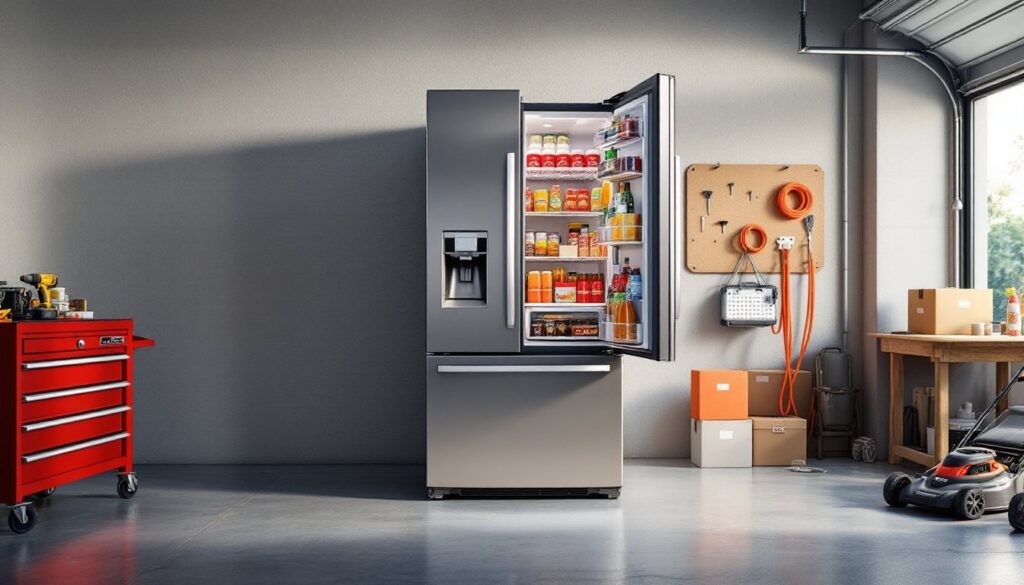
Refrigerators in unconditioned spaces (garages, basements) struggle with ambient temperature extremes. GE specifies operating ranges of 55-110°F: outside these limits, performance suffers. If the unit must remain in a garage, consider a garage refrigerator kit (a small heater that tricks the thermostat during cold weather).
Conclusion
Most ice maker problems stem from water supply issues, temperature settings, or simple clogs, all fixable without professional help. Work through these seven diagnostics systematically, starting with the easiest checks (water supply, switches) before moving to component testing and replacement. If the ice maker still won’t cooperate after addressing these areas, the issue likely involves the refrigerator’s sealed system (compressor, evaporator) or control board, jobs best left to certified technicians. Keep the user manual handy for model-specific quirks, and don’t hesitate to replace the ice maker assembly if it’s reached the end of its service life.