
Table of Contents
ToggleWhen you’re finishing drywall or drilling overhead holes, the last thing you want is a full-size vacuum trailing behind you. The Dyson V7 Trigger is a handheld cordless vacuum designed for the exact moments when a standard stick or upright vacuum makes no sense, quick cleanups, tight spaces, and job site detailing. Unlike its full-size siblings, the V7 Trigger sacrifices floor-cleaning attachments and extended battery for portability and single-handed operation. It’s not meant to replace your primary vacuum, but for homeowners tackling projects or maintaining workshops, it fills a role nothing else quite does.
Key Takeaways
- The Dyson V7 Trigger is a lightweight, one-handed cordless handheld vacuum designed for quick cleanups, tight spaces, and detailed work—not as a replacement for primary floor vacuums.
- With 30 minutes of runtime on standard mode and 6 minutes on Max mode, the Dyson V7 Trigger excels at vehicle interiors, furniture cleanup, and above-shoulder work like ceiling fans or crown molding.
- The V7 Trigger’s two-tier cyclone technology and washable post-motor filter handle fine particles like drywall and sawdust effectively, making it ideal for DIY projects and workshop detailing.
- Regular maintenance—emptying the dustbin after use, washing the filter monthly, and checking for cyclone blockages—keeps the Dyson V7 Trigger running efficiently and extends its lifespan.
- At $150–$200, the Dyson V7 Trigger offers solid value for homeowners with vehicles, pets, or active projects, but it’s not suitable for wet debris or heavy-duty workshop applications requiring a shop vac.
What Makes the Dyson V7 Trigger Different from Full-Size Vacuums?
The V7 Trigger shares the same V7 digital motor and cyclone technology found in Dyson’s full-size cordless stick vacuums, but it strips away the wand, floor head, and extended battery capacity. What remains is a handheld unit weighing just 3.77 pounds, designed for one-handed use.
Instead of a floor nozzle, you get a combination tool and crevice nozzle in the box. There’s no extension wand, which means you’re working within arm’s reach. Battery runtime is around 30 minutes on standard mode and roughly six minutes on Max mode, enough for targeted cleanup but not whole-home vacuuming.
This design choice makes sense for specific tasks: cleaning car interiors, vacuuming sawdust from a miter saw station, or pulling debris from cabinet interiors during a kitchen refit. The 0.54-liter dustbin is smaller than full-size models, but for quick jobs, it’s adequate. The bin empties with a single lever pull, and the clear plastic lets you see when it’s full before suction drops off.
Key Features That Matter for Homeowners and DIY Enthusiasts
The V7 Trigger uses two-tier Radial cyclones to separate dust and debris from airflow, maintaining suction as the bin fills. This matters when you’re vacuuming fine particles like drywall dust or sawdust, materials that clog traditional bag filters quickly.
Max mode delivers higher suction for stubborn debris or embedded particles in upholstery and vehicle carpets. Standard mode handles most jobs and conserves battery. There’s no auto-adjusting suction: you toggle between the two manually via a trigger-release button.
The trigger-lock mechanism is polarizing. You hold the trigger to run the vacuum, which prevents accidental battery drain but can fatigue your hand during longer sessions. Some users prefer constant-run models: others appreciate the instant shutoff when releasing the trigger.
Filtration includes a post-motor filter that captures allergens and fine particles, though Dyson doesn’t claim HEPA certification on this model. The filter is washable and should be rinsed monthly under cold water, then air-dried for 24 hours before reinstalling.
The included combination tool has retractable bristles for dusting, and the crevice nozzle reaches into gaps behind appliances or between studs during framing work. Additional Dyson attachments (mini motorized tool, soft dusting brush) are sold separately and compatible if you need them for pet hair or delicate surfaces.
Best Uses for the V7 Trigger Around Your Home
The V7 Trigger excels in scenarios where mobility and speed outweigh runtime. Here’s where it makes the most sense:
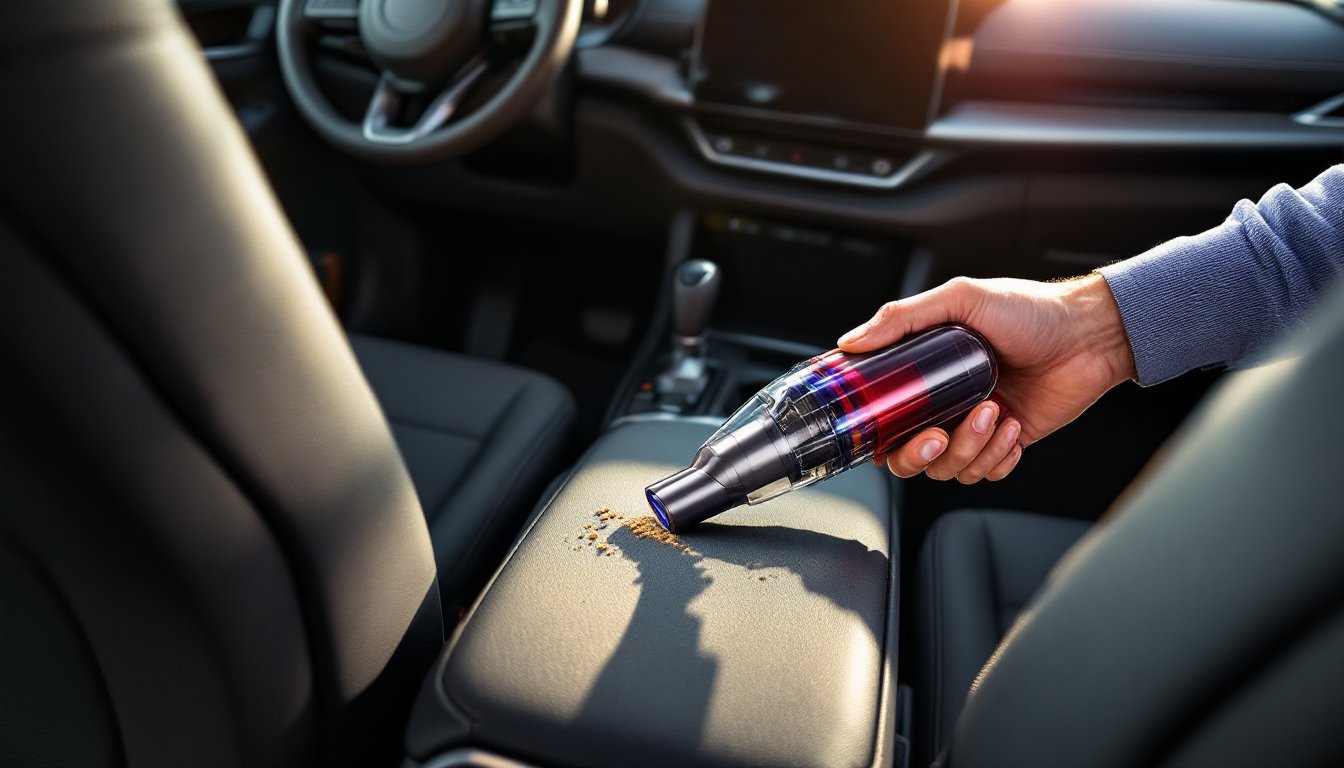
Vehicle interiors: The handheld format fits into car door pockets, under seats, and across dashboards without wrestling a floor head. Battery life covers a full interior and trunk detail on one charge.
Furniture and upholstery cleanup: Crumbs, pet hair, and dust collect on couches and chairs. The combination tool’s bristles agitate fabric while the suction pulls debris into the bin.
Quick spills and messes: Dropped cereal, tracked-in dirt from the mudroom, or debris near the workbench, situations where plugging in a shop vac feels like overkill.
HVAC vent and baseboard cleaning: The crevice nozzle reaches into register grilles and along baseboards where dust accumulates. Pair this with a microfiber cloth for a thorough job.
Above-shoulder work: Vacuuming ceiling fan blades, crown molding, or the tops of cabinets is easier with a lightweight handheld than balancing a stick vacuum on a ladder.
Workshop and Renovation Cleanup Applications
DIYers doing trim work, cabinetry, or small remodels will find the V7 Trigger’s portability useful, but it has limits. Sawdust from a miter saw or table saw is fine in small amounts, but a full day of cutting will fill the bin repeatedly. For heavy dust loads, a shop vac with a HEPA filter and larger capacity makes more sense.
During drywall installation or sanding, the V7 Trigger handles spot cleanup, pulling dust from inside electrical boxes, cleaning window sills, or vacuuming out cabinet interiors before installing hardware. It won’t replace a proper dust extraction system for power tools, but it’s handy for final detailing.
One practical tip: keep the dustbin empty when working with fine particles. Drywall dust and plaster residue compact quickly, reducing effective capacity. Empty the bin when it reaches the MAX line rather than waiting for suction to drop.
The V7 Trigger isn’t rated for wet debris, so avoid using it on damp sawdust, spilled liquids, or wet plaster. Moisture can clog the cyclones and damage the motor. For wet/dry cleanup, stick with a dedicated shop vac.
Performance: Suction Power and Battery Life in Real-World Use
Dyson doesn’t publish air watts for the V7 Trigger, but independent testing shows it delivers comparable suction to entry-level cordless stick vacuums in handheld mode, enough for surface debris and light-to-moderate embedded dirt.
On standard mode, expect around 30 minutes of runtime, which is sufficient for detailing a vehicle, vacuuming a staircase, or cleaning multiple pieces of furniture. Max mode drains the battery in roughly six minutes, so use it sparingly for tough spots like ground-in dirt on car mats or pet hair on upholstery.
Battery performance degrades over time. Lithium-ion cells lose capacity after 300–500 charge cycles, which translates to about two to three years of regular use. Dyson sells replacement batteries, but at a cost that approaches half the price of a new unit.
Charging takes 3.5 hours via the included wall-mounted dock. The dock is compact and can mount inside a closet, garage, or workshop. There’s no rapid-charge option, so plan ahead if you’ve drained the battery.
Suction holds steady until the battery drops below 20%, at which point you’ll notice a gradual decline. The vacuum doesn’t have a battery indicator beyond a simple LED that flashes when charge is low, so you won’t get much warning before it shuts off.
Maintenance Tips to Keep Your V7 Trigger Running Strong
Regular maintenance extends the V7 Trigger’s lifespan and keeps suction consistent. Here’s what to do:
Empty the dustbin after every use. Don’t let debris sit in the bin for days, it compacts and becomes harder to remove. Press the red lever to open the bin over a trash can, then tap the unit to dislodge stuck particles.
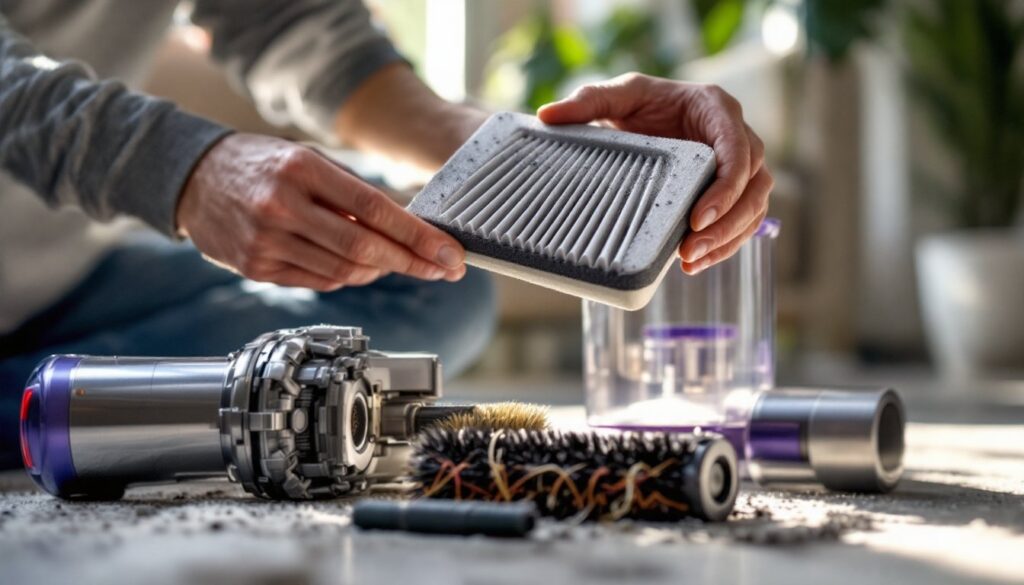
Wash the filter monthly. Remove the purple filter from the top of the unit, rinse under cold tap water until the water runs clear, and squeeze out excess moisture. Let it air-dry completely (24 hours minimum) before reinstalling. Running the vacuum with a damp filter can damage the motor.
Check the cyclone assembly for blockages. Hair, string, and fibrous debris can wrap around the cyclone entry points. Use a dry cloth or compressed air to clear buildup every few months.
Inspect the brush bar on motorized attachments (if you add the mini motorized tool). Cut away tangled hair with scissors, don’t yank it, as that can damage the bristles or belt.
Store the vacuum on the charging dock between uses. Lithium-ion batteries perform best when kept topped off rather than fully drained repeatedly.
Avoid vacuuming fine powders without pre-filtering. Talc, flour, and fireplace ash can clog the cyclones and filter. If you must vacuum these materials, consider a shop vac with a finer filtration system.
Dyson offers a two-year warranty covering defects in materials and workmanship, but not normal wear or battery degradation. Keep your purchase receipt and register the product online for easier warranty claims.
Is the Dyson V7 Trigger Worth It for Your Home?
The V7 Trigger makes sense if you need a portable, cordless vacuum for targeted tasks and already own a primary vacuum for floors. It’s particularly useful for homeowners with vehicles, pets, or active DIY projects where quick cleanup beats dragging out a full-size machine.
It’s not a substitute for a shop vac in a serious workshop, and the 30-minute runtime limits whole-home cleaning. If you’re comparing it to full-size cordless stick vacuums, note that models like the Dyson V7 Motorhead include a floor head and longer wand for the same motor and battery technology, sometimes at a similar price.
Pricing fluctuates, but expect to pay between $150 and $200 depending on sales and included accessories. At the lower end of that range, it’s a solid value for its intended use. Above $200, consider whether a refurbished full-size V7 or a competing handheld (like a Shark WandVac or Milwaukee M12) better fits your needs.
Bottom line: if you value cordless convenience and Dyson’s filtration in a compact package, the V7 Trigger delivers. Just understand its limitations before expecting it to handle jobs beyond its design.