
Table of Contents
ToggleIf you’ve ever faced a mountain of laundry after a busy week, bedding, towels, work clothes, and sports gear all demanding attention, you know the struggle. Standard washers and dryers force you into multiple loads, wasting time, water, and energy. Large capacity washer and dryer sets change that equation. They’re built for households that produce serious laundry volume, whether from big families, active lifestyles, or simply the desire to wash bulky items like comforters without a trip to the laundromat. This guide breaks down what qualifies as high capacity, the tangible benefits, key features worth paying for, installation considerations, and how to keep your investment running smoothly for years.
Key Takeaways
- A large capacity washer and dryer reduces laundry loads by up to 50%, saving hours monthly while using less water and energy per cycle due to advanced sensors.
- Large capacity washers of 5.0+ cubic feet safely handle bulky items like king-size comforters and bedding without cramming, extending fabric lifespan and improving wash quality.
- Energy Star certified models with high IMEF ratings save $50-200 annually, while heat pump dryers can reach payback in under five years despite higher upfront costs.
- Proper installation requires measuring doorways, confirming electrical/plumbing requirements (240V for electric dryers, gas line alternatives), and using rigid metal venting to prevent fire hazards.
- Monthly maintenance including gasket cleaning, drain filter checks, and lint trap vacuuming extends large capacity appliance lifespan to 15+ years and prevents costly repairs.
What Qualifies as a Large Capacity Washer and Dryer?
Large capacity isn’t marketing fluff, it’s measured in cubic feet. For washers, anything 5.0 cubic feet or larger is considered large capacity, with premium models hitting 5.5 to 6.0+ cubic feet. For dryers, the threshold is similar: 7.0 cubic feet and up qualifies as high capacity. To put that in perspective, a standard washer typically holds 3.5 to 4.5 cubic feet, enough for about 12-16 pounds of laundry. A large capacity washer can handle 18-22+ pounds in a single load.
That translates to real-world convenience. A king-size comforter, multiple sets of queen sheets, or a week’s worth of towels for a family of four can all go in one cycle. You’re not stuffing or forcing items in, which improves wash quality and reduces wear on fabrics.
Most high capacity washer and dryer units are front-loading designs. Front-loaders use gravity and tumbling action rather than an agitator, freeing up interior space. Top-load models with large capacity do exist, often in the 5.0-5.5 cubic foot range, but they sacrifice some efficiency and gentleness compared to front-loaders.
Pay attention to rated capacity versus usable capacity. Some manufacturers measure drum volume differently. Check user reviews and actual load testing rather than relying solely on the spec sheet. A washer rated at 5.2 cubic feet that’s poorly designed may not handle bulky items as well as a well-engineered 5.0 cubic foot model.
Top Benefits of Upgrading to a Large Capacity Laundry Set
Fewer loads, less time. This is the headline benefit. A household doing six to eight loads per week can often cut that in half with a large capacity set. That’s hours reclaimed every month, time not spent sorting, loading, transferring, folding, and repeating.
Better handling of bulky items. Oversized comforters, sleeping bags, heavy blankets, and even bath mats wash more effectively when they have room to move. Cramming a king-size duvet into a standard washer leaves it bunched and poorly rinsed. A high capacity washer and dryer pair lets these items tumble freely, improving cleaning and drying performance.
Lower per-load utility costs. Counterintuitively, running one large load often uses less water and energy than two medium loads. Modern large capacity washers use sensors to adjust water levels based on load size, so you’re not filling a massive drum for a small batch of clothes. Pair that with Energy Star certification, and the savings add up over the appliance’s 10-15 year lifespan.
Reduced wear on fabrics. Overloading a standard washer stresses seams, stretches elastic, and causes pilling. Clothes tumbling in a properly loaded large capacity drum experience less friction and mechanical stress. Delicate items and everyday wear both last longer.
Increased home value and appeal. If you’re planning to sell within a few years, updated, high-capacity laundry appliances are a selling point. Buyers, especially families, notice modern, efficient laundry setups. It’s not a major value driver like a kitchen remodel, but it contributes to the overall impression of a well-maintained, functional home.
Key Features to Look for When Shopping
Not all large capacity washer and dryer sets are created equal. Here’s what separates solid performers from budget models that underdeliver.
Energy Efficiency Ratings and Cost Savings
Energy Star certification is the baseline. These models use about 25% less energy and 33% less water than standard washers. On a large capacity unit, that efficiency compounds over hundreds of cycles per year.
Look for the Integrated Modified Energy Factor (IMEF) and Integrated Water Factor (IWF) on the yellow EnergyGuide label. Higher IMEF numbers (2.0+) and lower IWF numbers (below 4.0) indicate better efficiency. For dryers, check the Combined Energy Factor (CEF), values above 3.5 for electric and 3.3 for gas are strong.
Some utilities offer rebates for Energy Star appliances, which can offset $50-200 of the purchase price. Check your local provider’s website before buying.
Heat pump dryers are the efficiency champions, using up to 50% less energy than conventional electric dryers. They’re pricier upfront (often $1,200-1,800 vs. $700-1,200 for standard electric), but in high-use households, payback period can be under five years. They also run cooler, which is gentler on fabrics.
Smart Technology and Connectivity Options
Smart features aren’t gimmicks if you use them. Wi-Fi connectivity lets you start, pause, and monitor cycles from your phone, useful if you need to delay a load or get an alert when laundry is done. Many connected appliances integrate with home automation systems, allowing voice control via Alexa or Google Assistant.
Automatic detergent dispensers hold weeks’ worth of detergent and dose precisely based on load size. This prevents overuse (which leaves residue and wastes money) and underuse (which leaves clothes dingy). Models from LG, Samsung, and GE offer dispensers that handle 30-50 loads.
Cycle customization and diagnostics via app can extend appliance life. Some washers alert you to maintenance needs, cleaning the filter, running a drum-clean cycle, or checking hoses. Dryers can notify you when the lint trap or vent needs attention, reducing fire risk.
Steam cycles are common in premium models. Steam sanitizes without bleach, reduces wrinkles, and refreshes lightly worn items. If you have kids, pets, or allergies, steam cycles add real value.
Avoid paying extra for features you won’t use. If you don’t care about remote start or voice control, save $200-400 and get a non-connected model with the same capacity and efficiency.
Space Planning and Installation Considerations
Large capacity units are physically bigger. Before you buy, measure your laundry space carefully. Standard washer and dryer widths are 27 inches: large capacity models are often 27-29 inches wide, 30-34 inches deep, and 38-43 inches tall. Add 1 inch of clearance on each side and 4-6 inches behind for hoses, venting, and airflow.
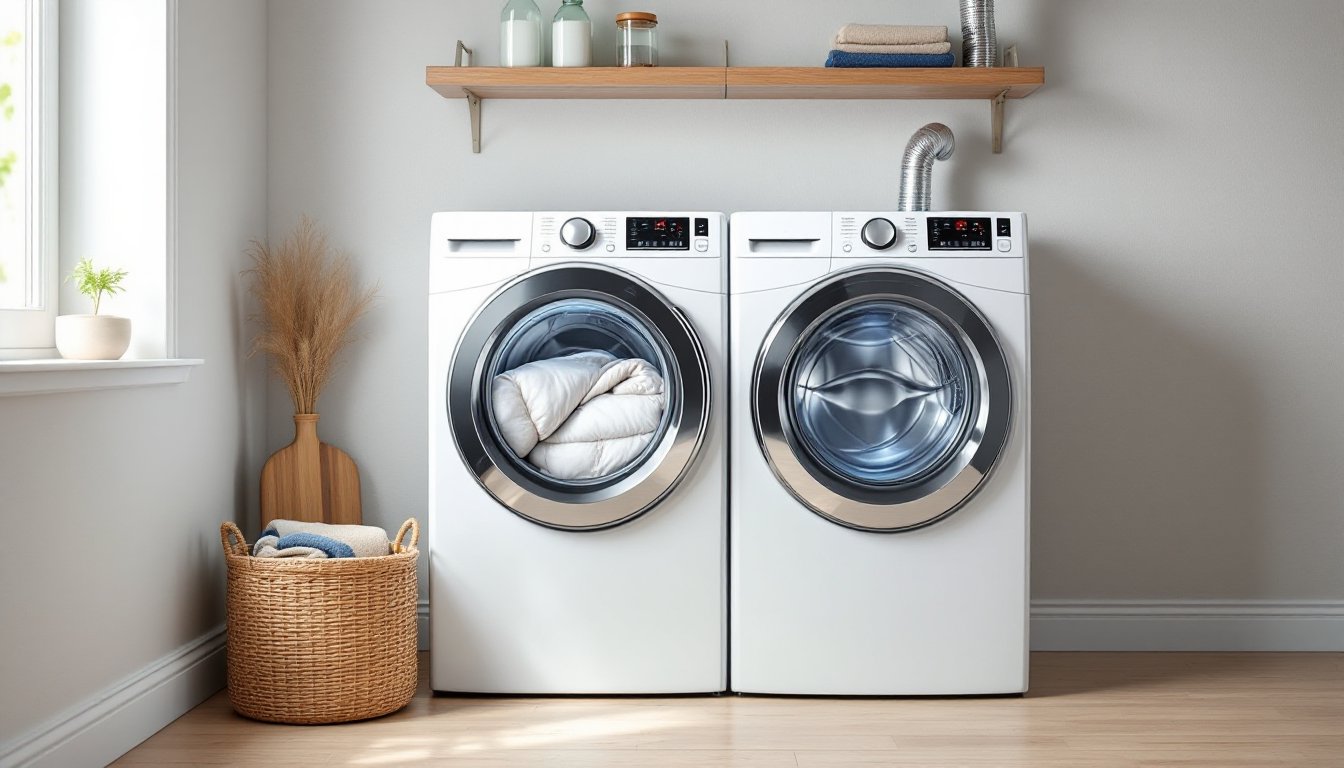
If you’re tight on space, stackable units or all-in-one washer-dryer combos exist in large capacities, but they’re less common and pricier. Most high-capacity sets are side-by-side installations.
Doorways and hallways matter. Measure the path from your entry door to the laundry room. A 29-inch-wide washer won’t fit through a standard 30-inch doorway if you factor in the cardboard, packing foam, and maneuvering room. Some manufacturers offer models with removable doors or hinges to ease installation.
Electrical and plumbing requirements vary. Front-load washers typically need a 120V outlet, while some high-efficiency models (especially those with integrated heaters) require dedicated 20-amp circuits. Dryers need either a 240V electric hookup (3- or 4-prong) or a gas line with a 120V outlet. If you’re switching from electric to gas or vice versa, budget $300-800 for an electrician or plumber.
Venting for dryers is non-negotiable for gas and most electric models. Use rigid or semi-rigid metal ducting, 4 inches in diameter, running as straight as possible to the exterior. Vinyl or foil accordion ducts are fire hazards and restrict airflow. Keep vent runs under 25 feet total length: subtract 5 feet for every 90-degree elbow. Heat pump dryers are ventless, using a condensation system instead, which adds installation flexibility.
Leveling is critical, especially for front-load washers. An unlevel washer vibrates excessively during spin cycles, damaging internal components and shaking the floor. Use a torpedo level and adjust the feet until the unit is perfectly level front-to-back and side-to-side. Some models have self-leveling rear feet: confirm this in the manual.
Anti-vibration pads or washer pedestals reduce noise and movement. Pedestals also raise the units 12-15 inches, making loading and unloading easier on your back, worth considering if you’re doing laundry daily.
Maintaining Your Large Capacity Washer and Dryer for Longevity
Proper maintenance keeps a high capacity washer and dryer running efficiently for 15+ years. Most failures come from neglect, not defects.
For washers:
- Clean the door gasket and detergent dispenser monthly. Front-load washers trap moisture, detergent residue, and lint in the rubber gasket. Wipe it down with a 1:1 vinegar-water solution and leave the door ajar between loads to air out. Pull the detergent drawer and rinse it under hot water.
- Run a cleaning cycle monthly. Use a washing machine cleaner tablet or 2 cups of white vinegar in an empty hot-water cycle. This removes soap scum, mildew, and mineral deposits.
- Check hoses annually. Inspect inlet hoses for cracks, bulges, or corrosion. Replace them every 5 years even if they look fine, rubber degrades over time. Use stainless steel braided hoses for added burst protection.
- Clean the drain pump filter quarterly. Most front-loaders have a small filter (usually behind a panel at the bottom front). Hair, coins, and lint collect here. If your washer won’t drain or smells funky, this is often the culprit. Have a shallow pan ready, water will spill when you unscrew it.
For dryers:
- Clean the lint trap after every load. This isn’t optional. A clogged lint screen reduces efficiency and increases fire risk.
- Vacuum the lint trap housing monthly. Lint bypasses the screen and accumulates in the slot below. Use a dryer vent brush or vacuum attachment to clear it.
- Inspect and clean the exhaust vent annually. Disconnect the vent hose and use a flexible dryer vent brush to clear buildup from the hose and exterior vent cap. Lint accumulation in vents causes 15,000+ house fires per year in the U.S., according to the National Fire Protection Association.
- Check the drum seal and rollers. If you hear squeaking or thumping, the drum rollers or belt may be worn. Replacing them costs $150-300 through a technician, far less than a new dryer.
- Don’t overload. Even though you have a large capacity dryer, cramming it full reduces airflow and drying efficiency. Clothes should tumble freely. For best results, dry loads at 75-80% of rated capacity.
General tips:
- Use the right detergent. High-efficiency (HE) washers require low-sudsing HE detergent. Regular detergent creates excess suds that don’t rinse out, leaving residue and potentially damaging pumps. HE detergent is concentrated, use the recommended amount, usually 1-2 tablespoons per load.
- Balance loads. Don’t wash one heavy towel with lightweight t-shirts. Imbalanced loads cause washers to vibrate and “walk” across the floor, stressing components.
- Avoid fabric softener in the drum. It leaves residue on sensors and gaskets. Use dryer balls or add vinegar to the rinse dispenser instead.
Regular maintenance is simple and takes less than 30 minutes per month. The best front-load washers last longest when properly cared for, and the same applies to dryers. Treat your appliances right, and they’ll handle thousands of loads without major repairs.
For homeowners tracking connected device performance and lifespan, smart home platforms can monitor usage patterns and alert you to maintenance needs before problems arise. If your washer or dryer supports diagnostics, enable notifications, they’ll catch issues early and save you from emergency service calls.