
Table of Contents
ToggleA quality range hood isn’t just about clearing smoke, it’s about protecting your kitchen from grease buildup, moisture damage, and lingering odors. GE range hoods have earned their place in American kitchens for decades, offering reliable ventilation across a range of price points and styles. Whether you’re replacing a worn-out unit or upgrading to better airflow during a remodel, understanding what separates one model from another makes the difference between a hood that works quietly in the background and one that rattles, underperforms, or doesn’t fit your cooking habits. This guide walks through the practical considerations: types, features, installation basics, and upkeep.
Key Takeaways
- A GE range hood protects your kitchen from grease buildup, moisture damage, and odors while offering reliable ventilation at multiple price points and styles.
- Choose the right type—under-cabinet hoods work for standard kitchens, wall-mount hoods suit exterior walls, and island hoods require ceiling support—based on your cooking space layout.
- Match CFM output to your cooktop: aim for 1 CFM per 100 BTU of gas burner output or 250–300 CFM for electric cooktops to ensure efficient ventilation.
- Proper GE range hood installation requires external venting (not into attics), secure mounting with appropriate fasteners, rigid metal ductwork sealed with foil tape, and a dedicated 15-amp circuit.
- Clean grease filters every 1–3 months, inspect ductwork annually, and maintain the damper function twice yearly to keep your GE range hood performing for 10–15 years.
Why Choose a GE Range Hood for Your Kitchen?
GE Appliances manufactures range hoods at multiple price points, from builder-grade under-cabinet models to premium wall-mount units with variable-speed blowers. The brand’s longevity in the appliance market means replacement parts and service networks are widely available, a practical consideration when a blower motor or grease filter needs attention five years down the road.
Most GE hoods use standardized mounting templates and duct sizes (6-inch or 7-inch round, or 3.25″ x 10″ rectangular), which simplifies retrofits in older kitchens. Many models meet HVI (Home Ventilating Institute) certification standards for airflow and noise, giving buyers third-party verification of CFM (cubic feet per minute) ratings rather than relying solely on marketing claims.
GE’s mid-range models typically include aluminum mesh filters that can be washed in a dishwasher, and several lines offer optional recirculating charcoal kits for installations where external venting isn’t feasible. If someone’s working with a kitchen that has structural or exterior limitations, common in condos or older row homes, this flexibility matters.
The brand’s availability through big-box retailers and appliance dealers also means competitive pricing and straightforward warranty service. For a homeowner balancing budget with performance, GE sits in that practical middle ground: not the cheapest option, but generally not the one requiring a service call from a specialist two states away.
Types of GE Range Hoods and Which One Fits Your Space
Under-Cabinet GE Range Hoods
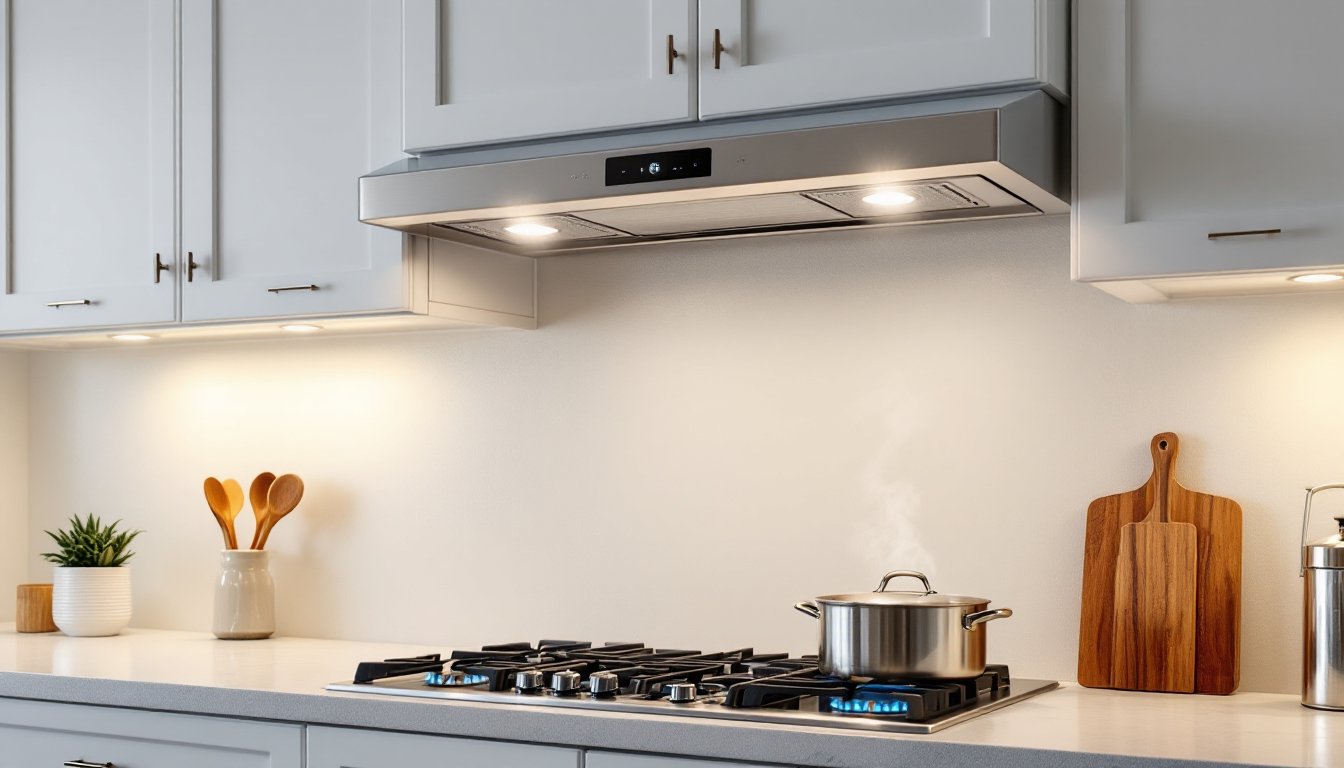
These mount directly beneath a wall cabinet, making them the most common choice in kitchens with standard 30-inch or 36-inch ranges and upper cabinetry. GE’s under-cabinet models typically range from 160 CFM to 400 CFM, suitable for electric and gas ranges up to about 60,000 BTU total output.
Installation involves screwing a mounting bracket into the underside of the cabinet and running ductwork through the cabinet or directly through the wall behind it. If ducting isn’t an option, most under-cabinet GE hoods accept a recirculating kit, which filters air through activated charcoal and returns it to the kitchen. Recirculating works for light cooking but doesn’t handle grease or moisture as effectively as external venting.
Depth matters here. Standard cabinets are 12 inches deep: many GE under-cabinet hoods are 17–18 inches front-to-back. That overhang helps capture rising steam and smoke but can feel bulky in a small galley kitchen. Check the hood’s depth spec against your cabinet layout before ordering.
Wall-Mount and Island GE Range Hoods
Wall-mount (chimney-style) hoods attach directly to the wall and extend upward with a decorative chimney cover that conceals the ductwork. These work well in kitchens without upper cabinets or where the range sits against an exterior wall, making for a shorter duct run. GE’s wall-mount models often deliver 300–600 CFM, adequate for higher-output gas ranges and heavy cooking.
Island hoods suspend from the ceiling above a cooktop that’s not against a wall. They require structural support, typically a 2×6 or 2×8 blocking installed between ceiling joists during framing or retrofitted through ceiling access. Many kitchens, as noted in DIY ventilation projects, require additional blocking and longer duct runs, which can reduce effective CFM if bends and distance aren’t accounted for.
Both styles need adequate clearance: 24–30 inches above electric cooktops, 30–36 inches above gas. These aren’t suggestions, they’re fire safety minimums. Too low, and you risk igniting grease or damaging the hood’s internals. Too high, and capture efficiency drops off sharply.
Key Features to Look for in GE Range Hood Models
CFM and blower type dictate how quickly a hood clears the air. A general rule: for gas ranges, aim for 1 CFM per 100 BTU of burner output. A 40,000 BTU range ideally pairs with a 400 CFM hood. For electric cooktops, 250–300 CFM handles most everyday cooking. GE models with multi-speed or variable-speed blowers let users dial back noise during simmering and ramp up airflow for searing or frying.
Noise levels are measured in sones. Most GE hoods fall between 1.5 and 6.5 sones at max speed. Anything above 4 sones becomes noticeably loud, similar to normal conversation volume. If the range sits in an open-plan kitchen near a living area, prioritize models rated under 3 sones, even if it means stepping up in price.
Lighting on GE hoods typically uses LED bulbs, which run cooler and last longer than older halogen or incandescent setups. Look for models with two-bulb configurations to eliminate shadows over the cooktop. Some higher-end GE hoods include dimmer switches, helpful if the range hood doubles as task lighting during meal prep.
Filter access and type affect maintenance ease. Dishwasher-safe aluminum mesh filters are standard on most GE models. Baffle filters (stainless steel slats) are quieter and more effective at trapping grease but cost more upfront. Avoid hoods with permanent filters that require scrubbing by hand: they’re a hassle that most people neglect.
Ductwork compatibility varies. Some GE models include a built-in damper to prevent backdrafts when the hood is off: others require an in-line or wall cap damper. If the duct run exceeds 30 linear feet or includes more than two 90-degree elbows, consider a model with a higher CFM rating to offset the airflow loss from friction and turns. Testing done by appliance experts confirms that duct design can cut effective ventilation by 25% or more in poorly planned runs.
Installing Your GE Range Hood: Step-by-Step Overview
Before starting: Verify that your existing or planned ductwork terminates outside, not into an attic or crawl space. Venting into unconditioned spaces invites mold, condensation, and code violations under most interpretations of the IRC (International Residential Code). If local codes require a makeup air system for hoods over 400 CFM, plan for that too, it’s not a DIY add-on.
Safety first: Shut off power at the breaker if you’re tying into existing wiring. Wear safety glasses when drilling overhead, and use a dust mask if cutting drywall or working in a dusty attic.
-
Mark and level the mounting location. For under-cabinet hoods, measure down from the cabinet bottom per the manufacturer’s template (usually 1–2 inches). For wall-mount hoods, use a laser level or 4-foot spirit level to ensure the mounting bracket is plumb, any tilt becomes obvious once the chimney cover is installed.
-
Drill pilot holes and secure the mounting bracket. If screwing into studs, use #10 x 2.5-inch wood screws. If you’re hitting only drywall, toggle bolts or heavy-duty anchors rated for at least 50 pounds are necessary. Island hoods require lag bolts into ceiling blocking: confirm blocking location with a stud finder or by accessing the attic.
-
Run ductwork before hanging the hood. Use rigid metal duct (galvanized steel or aluminum) rather than flexible duct wherever possible, it’s smoother inside, which preserves airflow. Seal all joints with foil HVAC tape, not standard duct tape, which dries out and fails. Avoid plastic snap-together duct: it’s a fire hazard and prohibited by code in many areas.
-
Make electrical connections. Most GE hoods require a dedicated 15-amp circuit. If the existing junction box is in the cabinet, you can often hardwire directly. If not, some models accept a three-prong plug. Follow NEC (National Electrical Code) standards and consider hiring a licensed electrician if you’re unfamiliar with junction box wiring or if the circuit needs upgrading.
-
Hang the hood and attach the chimney cover. Have a second person support the hood while you align it with the bracket and secure it with the provided screws. Slide the chimney sections into place and adjust to conceal ductwork. Tighten set screws or brackets at the top to lock the chimney in position.
-
Test airflow and damper function. Turn on the blower at each speed. Hold a tissue near the edge of the hood to confirm suction. Check the exterior vent cap to ensure the damper opens fully and closes when the blower stops.
Maintenance Tips to Keep Your GE Range Hood Running Efficiently
Grease filters should be cleaned every one to three months, depending on cooking frequency. Remove the mesh or baffle filters and run them through the dishwasher on a hot cycle, or soak them in hot water with degreasing dish soap, then scrub with a soft brush. Buildup reduces airflow and creates a fire hazard: grease-saturated filters can ignite if flames reach them.
Charcoal filters in recirculating setups aren’t washable. Replace them every four to six months or when odors linger after cooking. GE publishes part numbers for each model: third-party filters are cheaper but may not fit as precisely.
Wipe down the hood exterior weekly with a damp microfiber cloth and mild cleaner. Stainless steel finishes streak easily, wipe in the direction of the grain and use a cleaner formulated for stainless to avoid hazing. For stubborn grease on the underside, a degreaser like Simple Green or diluted dish soap works well. Avoid abrasive pads that scratch the finish.
Inspect ductwork annually. If accessible, remove the duct at the hood connection and look inside for grease accumulation. In homes where kitchen ventilation is heavily used, a duct cleaning every few years prevents buildup that restricts airflow and poses a fire risk. Professional duct cleaning costs $150–$300 depending on length and accessibility.
Check the blower motor and fan blades. If the hood is noticeably louder than when new or airflow has dropped, the fan blades may be coated in grease. Some GE models allow access to the blower assembly by removing screws on the underside: clean blades carefully with degreaser and a rag, ensuring the motor is off and cool. If the motor itself is failing, unusual noise, burning smell, intermittent operation, replacement motors are available, but installation often requires some disassembly and electrical work.
Test the damper function twice a year. A stuck damper allows cold air infiltration in winter or lets insects enter in warmer months. If the damper doesn’t close fully, check for grease buildup at the hinge or bent flaps on the exterior cap.
Consistent upkeep keeps a GE range hood performing for 10–15 years or longer. Neglect, especially of filters and ductwork, cuts that lifespan in half and turns ventilation into a noise-maker that moves little air.