
Table of Contents
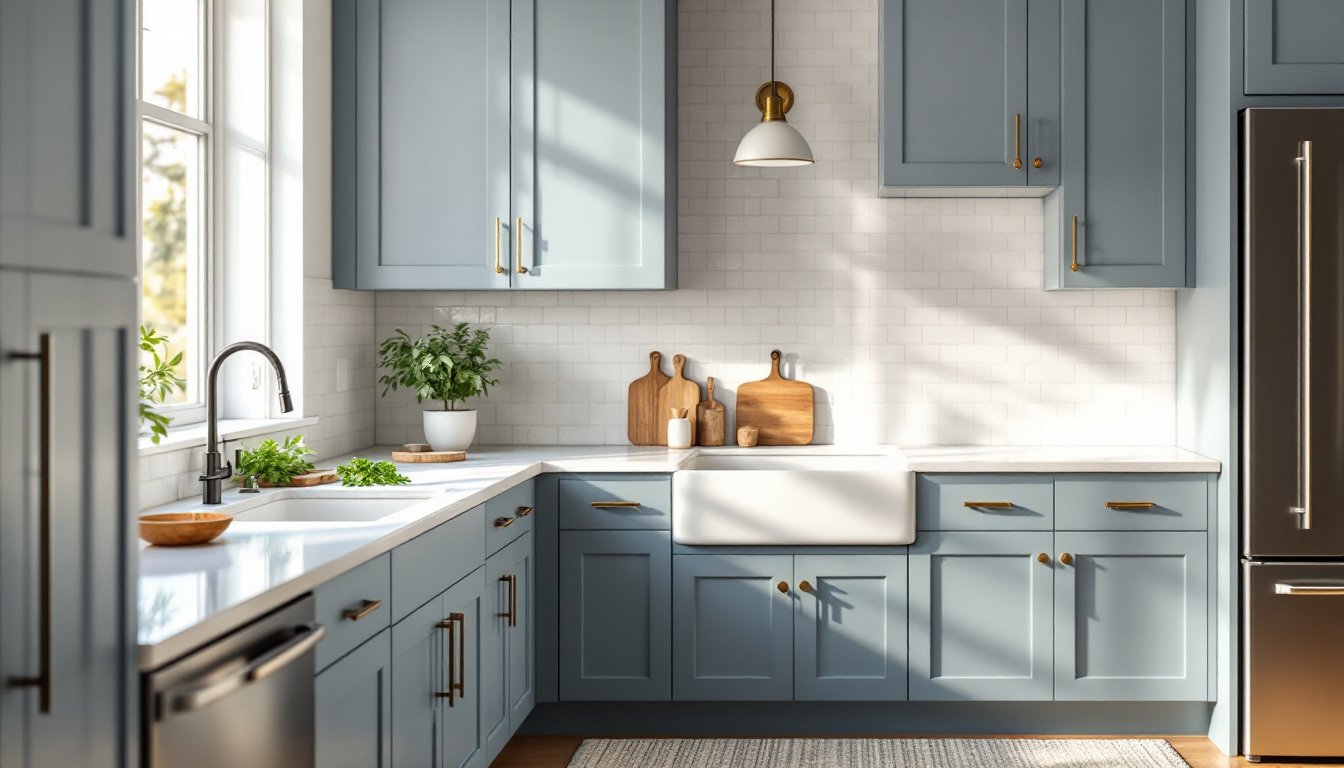
ToggleGreyish blue kitchen cabinets sit right in the sweet spot between trendy and timeless. They’re not the stark white everyone’s tired of, but they won’t look dated in five years either. This shade, sometimes called blue grey, brings calm, depth, and just enough color to make a kitchen feel custom without overwhelming the space. Whether you’re planning a full remodel or just refreshing existing cabinets with paint, getting the tone, finish, and pairings right makes all the difference. This guide walks through choosing shades, coordinating materials, and tackling the DIY work if you’re rolling up your sleeves.
Key Takeaways
- Greyish blue kitchen cabinets bridge the gap between trendy and timeless, offering flexibility that pairs well with nearly every countertop material and appliance finish.
- Choose your shade based on natural light direction and existing finishes—lighter grey blue works in smaller kitchens while deeper navy-grey tones add richness to larger spaces.
- Popular greyish blue paint colors like Benjamin Moore Smokey Slate and Sherwin-Williams Network Gray require sample testing on actual cabinet doors at different times of day before committing.
- Pair blue grey cabinets with white or soft grey subway tile backsplashes and white quartz counters, while avoiding busy patterns or beige tones that can make the cabinets look dingy.
- DIY cabinet painting takes 3–5 days and requires proper prep work, a bonding primer, cabinet-specific paint like Benjamin Moore Advance, and patience for drying between coats.
- Complement your greyish blue cabinets with brushed brass or matte black hardware that coordinates with your faucet and lighting finishes for a cohesive, intentional look.
Why Greyish Blue Cabinets Are Perfect for Modern Kitchens
Greyish blue cabinets work because they bridge neutrals and color. Grey alone can read flat or institutional: pure blue can feel too bold for cabinetry that you’ll live with daily. The hybrid tone offers flexibility.
They pair well with nearly every countertop material, quartz, granite, butcher block, concrete, and they don’t clash with stainless appliances or warm wood floors. In smaller kitchens, lighter grey blue shades keep things open without the sterility of white. In larger spaces, deeper navy-tinged greys add richness without going dark and moody.
From a resale perspective, greyish blue reads as intentional and current in 2026 without being a design risk. Buyers see it as an upgrade from builder-grade oak or generic white, but it’s not polarizing like emerald green or jet black cabinetry. If you’re planning to sell within a few years, this is a safe play that still shows personality.
One practical note: greyish blue hides wear better than pure white. Scuffs, fingerprints, and the slight discoloration that comes from cooking grease are less visible, especially in satin or semi-gloss finishes.
Best Greyish Blue Paint Colors for Kitchen Cabinets
Picking the right paint color comes down to undertones and lighting. Most greyish blue paints lean either green, purple, or true grey depending on the room’s natural light.
Benjamin Moore Smokey Slate (2131-40) is a soft grey blue with minimal green. It reads cooler in north-facing kitchens and warmer under incandescent lighting. Good for traditional or transitional styles.
Sherwin-Williams Network Gray (SW 7073) is a true grey with just a hint of blue, almost a chameleon. It’s a safe choice if you’re unsure, because it won’t swing too blue in certain lights.
Farrow & Ball Stiffkey Blue (No. 281) leans deeper and more saturated, closer to navy with grey undertones. Best for larger kitchens with ample natural light or as a lower-cabinet-only choice paired with white uppers.
Behr Blueprint (S470-5) is a mid-tone grey blue that’s widely available and budget-friendly. It’s got a slight warmth that works well with brass or gold hardware.
Always test samples on actual cabinet doors, not just walls. Cabinet surfaces reflect light differently, and the sheen (satin vs. semi-gloss) will shift how the color reads. Paint at least two coats on a sample board and view it at different times of day before committing to five gallons.
How to Choose the Right Shade for Your Space
Start by evaluating your kitchen’s natural light. North-facing kitchens get cooler, bluer light all day, grey blue cabinets can feel icy here unless you choose a shade with warm undertones. South-facing kitchens get warm, golden light, which can make blue-grey cabinets look more grey than blue.
Consider your existing finishes. If you’ve got warm oak floors or a honey-toned butcher block island, a grey blue with subtle green or taupe undertones will harmonize better than a cool, steely shade. If your floors are grey tile or you have white quartz counters, you can go cooler and more saturated.
Decide on contrast level. Lighter grey blue tones (like a soft powder blue-grey) create a serene, cohesive look, especially in open-plan layouts. Deeper shades, closer to navy and grey kitchen cabinets, add drama and define the kitchen as its own zone. If your kitchen lacks architectural interest (no crown molding, basic layout), a deeper blue grey can add that visual weight.
Test paint samples on both upper and lower cabinets. Uppers catch more light and will read lighter: lowers often sit in shadow and can look a full shade darker. Some designers paint lowers a deeper grey blue and uppers a lighter tint of the same color for a two-tone effect that feels intentional.
Finally, think about longevity. Lighter gray blue kitchen cabinets are easier to refresh or repaint down the line. Darker shades may require more prep and additional coats if you ever want to go lighter.
Pairing Greyish Blue Cabinets with Countertops and Backsplashes
Countertops: White quartz with subtle grey veining is the most versatile pairing, it keeps things bright and doesn’t compete. Carrara or Calacatta marble works if you want a more traditional or upscale look, but be ready for maintenance (sealing, etching concerns). For warmth, butcher block or light oak counters add contrast without clashing. Avoid busy granite with lots of movement: it fights the soft, uniform tone of the cabinets.
Concrete counters in a light grey or off-white finish pair beautifully with deeper greyish blue cabinets, especially in modern or industrial kitchens. Just confirm the concrete is properly sealed, it’s porous and can stain.
Backsplashes: Subway tile in white or soft grey is the safe, classic choice. For more interest, try a white zellige tile with texture and slight color variation, the handmade irregularity complements the painted cabinet finish. Glass tile in pale blue or seafoam can echo the cabinet color without being matchy. Avoid overly trendy patterns (Moroccan fish scales, bold geometric) unless the rest of the kitchen is very simple.
If you’re going bold, consider a marble slab backsplash that runs full-height behind the range. It adds luxury and keeps the greyish blue cabinets grounded.
Avoid: Beige or tan backsplash, it’ll make grey blue cabinets look dingy. Stick with whites, soft greys, or muted blues and greens.
Hardware and Fixtures That Complement Blue Grey Cabinets
Hardware is where you set the style direction. Brushed brass or aged brass pulls and knobs add warmth and work especially well with cooler grey blue tones. They’re having a long run in 2026 and pair beautifully with white counters and stainless appliances.
Matte black hardware creates strong contrast and a modern edge. It’s a good fit if your kitchen has black window frames, a black range, or black pendant lights. Just don’t overdo it, black hardware plus black appliances plus a black faucet can feel heavy.
Polished nickel or chrome keeps things crisp and traditional. These work best with lighter grey blue shades and classic cabinet styles (shaker, raised panel). They’re also the most budget-friendly and widely available.
Unlacquered brass will patina over time, developing a lived-in look that works in farmhouse or vintage-inspired kitchens. It’s higher maintenance but adds character.
For cabinet hardware size, use pulls that are roughly one-third the width of the cabinet door or drawer front. Standard pulls are 3″, 4″, or 5″ center-to-center. Drawers typically get a single pull centered horizontally: doors get a knob or pull placed 2.5″ to 3″ from the corner.
Faucets and lighting: Coordinate finish with hardware, but exact matching isn’t required. A brushed gold faucet can pair with brass cabinet pulls. Pendant lights over an island should echo the overall metal tone, brass pendants with brass pulls, black fixtures with black hardware. Mixing metals is fine if done intentionally (one warm, one cool), but avoid more than two finishes in the same sightline.
DIY Tips for Painting Your Cabinets Greyish Blue
Painting cabinets is a multi-day project, but it’s doable if you’re methodical. Expect 3–5 days depending on kitchen size and drying time between coats.
Prep work (day 1):
- Remove all cabinet doors, drawers, and hardware. Label each piece with painter’s tape and a number so you know where it goes back.
- Clean everything with TSP (trisodium phosphate) or a degreaser. Cooking oil and grime will prevent paint adhesion. Rinse and let dry completely.
- Lightly sand all surfaces with 120-grit sandpaper to scuff the existing finish. You’re not stripping it, just giving the primer something to grip. Wipe dust off with a tack cloth.
- Fill any dents or dings with wood filler. Let dry, then sand smooth.
Priming (day 2):
Use a bonding primer like Zinsser B-I-N (shellac-based) or KILZ Adhesion (water-based). Shellac primers dry faster and block stains better, but they smell and require mineral spirits for cleanup. Water-based primers are easier to work with but need longer dry times.
Apply primer with a foam roller for flat surfaces and a 2″ angled brush for edges, details, and profiles. Let dry per manufacturer specs (usually 1–2 hours for shellac, 3–4 for water-based).
Painting (days 3–4):
Use a cabinet-specific paint like Benjamin Moore Advance, Sherwin-Williams Emerald Urethane, or Behr Alkyd Enamel. These level well and cure to a hard, durable finish. Standard wall paint won’t hold up to daily wear.
Apply two coats minimum, three if you’re going from a dark stain to a light grey blue. Use the same roller-and-brush technique as priming. Lightly sand between coats with 220-grit sandpaper for a smoother finish, wipe dust with a tack cloth before the next coat.
Drying time between coats is typically 2–4 hours, but check the can. Some urethane paints need 6 hours.
Safety: Wear a respirator mask (not just a dust mask) when using oil-based or alkyd paints. Ventilate well. Wear nitrile gloves and eye protection. If you’re spraying instead of rolling, full PPE is required.
Reassembly (day 5):
Let doors and drawers cure for 24–48 hours before reinstalling. Paint reaches full hardness after 7–14 days, so handle gently at first. Reattach hardware, hang doors, and adjust hinges as needed.
Tool alternatives: A paint sprayer (HVLP or airless) gives the smoothest finish but requires practice and thorough masking. If you’re new to spraying, stick with rollers and brushes. A mini foam roller works better than a standard 9″ roller for cabinet doors.
Conclusion
Greyish blue cabinets offer the best of both worlds, color without commitment, style without risk. Whether you’re painting existing cabinets or spec’ing new ones, focus on undertones, test samples in your actual light, and don’t skimp on prep if you’re DIYing. Get the finish details right, counters, hardware, backsplash, and this shade will work for years without feeling tired.